Spring 2026 has arrived in Harrogate and Knaresborough, bringing longer days, warming temperatures, and the annual emergence of wasp queens searching for nest sites. Properties throughout High Harrogate, Low Harrogate, Starbeck, Pannal, Knaresborough town center, Scotton, and Scriven will experience wasp activity over coming months. Understanding when to act, what to expect, and why professional removal matters protects Harrogate and Knaresborough families from summer wasp dangers.
This complete guide covers everything residents need to know about wasp nest removal in Harrogate and Knaresborough including seasonal timing and why spring matters, common nest locations in local properties, professional removal costs and process, why DIY attempts fail dangerously, and how to prevent wasp problems before they develop. Whether you’re in a Victorian terrace in Harrogate town center, a detached property in Pannal with extensive gardens, or anywhere across Knaresborough, this guide provides the local knowledge you need.
Contents
- 1 Understanding Wasp Season in Harrogate and Knaresborough
- 2 Common Wasp Nest Locations in Harrogate and Knaresborough Properties
- 3 Professional Wasp Nest Removal: The Harrogate and Knaresborough Process
- 4 Why DIY Wasp Nest Removal Fails in Harrogate
- 5 Wasp Prevention for Harrogate and Knaresborough Properties
- 6 When to Call Professional Wasp Removal in Harrogate
- 7 Harrogate and Knaresborough Wasp Nest Removal Service
Understanding Wasp Season in Harrogate and Knaresborough
Wasp activity follows predictable seasonal patterns across Harrogate and Knaresborough that residents can use to time preventive action or recognise developing problems. March and April mark the critical transition period when overwintered queens emerge from hibernation seeking nest sites. These queens spent winter sheltered in loft spaces, garden sheds, or protected outdoor locations throughout Harrogate and Knaresborough properties. When daytime temperatures consistently exceed 10-12 degrees Celsius—typically late March through April in North Yorkshire—queens become active.
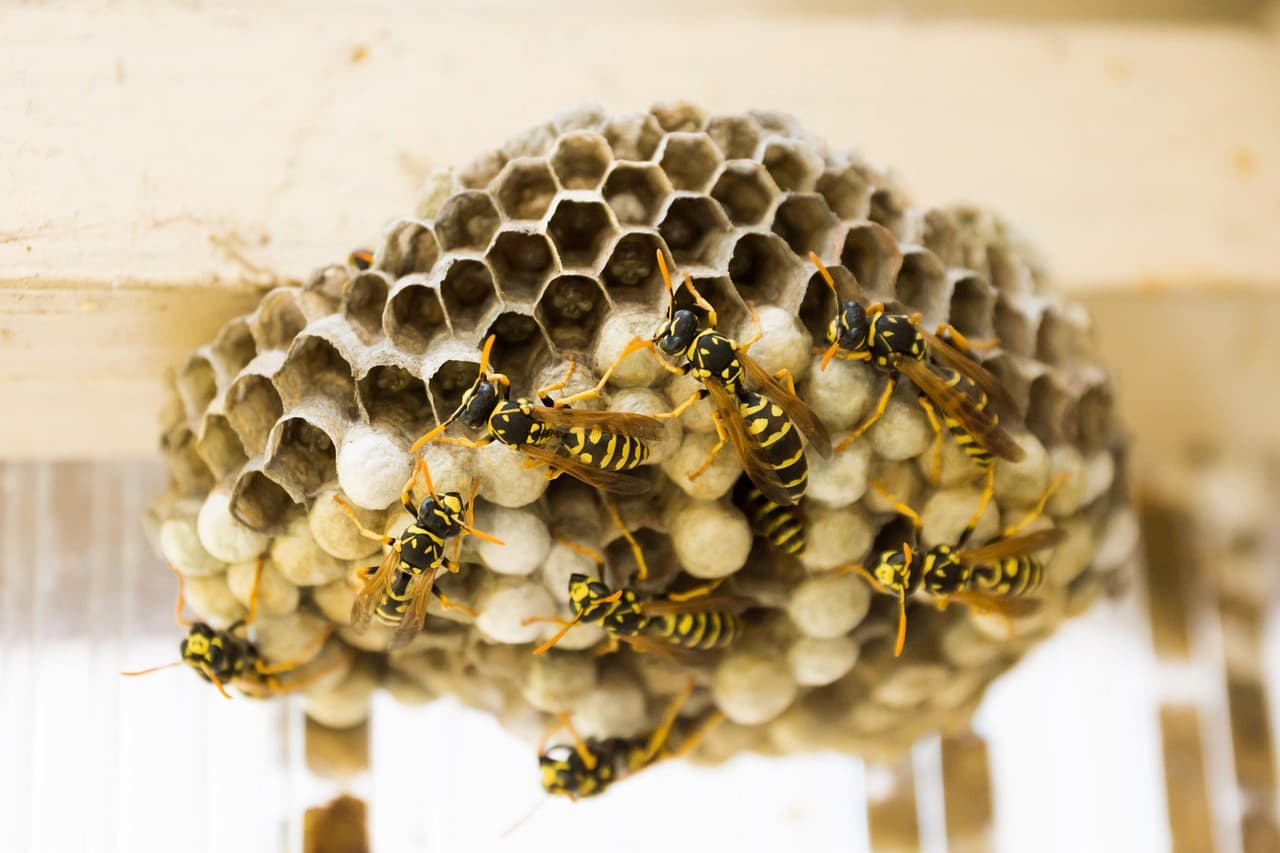
During these early weeks, you might notice individual large wasps around your Harrogate or Knaresborough property. These are queens searching for suitable nest locations. They inspect loft vents, soffits, airbricks, and sheltered garden locations. Once a queen selects a site, she begins building a small initial nest—roughly golf ball sized—containing just a few cells where she lays her first eggs. She tends these alone, feeding emerging larvae until they develop into the first generation of worker wasps. This establishment phase takes approximately four to six weeks from initial building through first worker emergence.
This early spring period offers the absolute best opportunity for intervention across Harrogate and Knaresborough. Queens are vulnerable, working alone without defensive workers. Nests are tiny and easily accessible. Removal is simple and inexpensive. A nest discovered and removed in April prevents the entire summer problem. Professional wasp nest removal in Harrogate during April costs £80-90 and takes approximately thirty minutes. The same nest left until August contains thousands of aggressive wasps, poses genuine danger, and while treatment costs remain similar, the risk and stress are dramatically higher.
By May, first worker generations emerge in nests established during April. These workers immediately take over all nest building and foraging duties while queens focus exclusively on egg laying. Nest growth accelerates rapidly from this point. What measured golf ball size in April becomes tennis ball sized by late May and football sized by mid-June. Worker populations explode during this growth phase. A nest with fifty workers in early May might contain five hundred by month’s end and several thousand by July. Harrogate and Knaresborough residents start noticing increased wasp activity around properties during May and June as worker populations expand and foraging intensifies.
July and August represent peak wasp season across Harrogate and Knaresborough. Nests reach maximum size containing anything from several hundred to several thousand wasps depending on species and conditions. Common wasp nests in ideal locations can exceed five thousand workers. German wasp nests sometimes reach ten thousand. These peak months bring highest risk of stings, most aggressive defensive behavior, and greatest danger from disturbed nests. This is when most Harrogate and Knaresborough residents discover nests that established unnoticed during spring months. Large properties with extensive gardens particularly in areas like Pannal, Hookstone, and rural Knaresborough often have nests in remote locations—distant garden sheds, dense mature hedgerows, or rarely accessed roof sections—that grow dangerously large before discovery.
September marks the beginning of colony decline but increased aggression. Queens stop producing worker larvae, focusing instead on reproductive males and new queens for next year. Workers no longer have larvae to feed, losing their purpose and reward system within the colony. They become attracted to sweet foods and drinks, creating nuisance at outdoor gatherings and increased sting risk. Although colonies are naturally dying, September wasps are often more aggressive than July wasps because they have nothing to lose defending nests. October sees final colony collapse as temperatures drop. All workers and males die. Only newly emerged fertilised queens survive, seeking overwintering sites to begin the cycle again next spring.
Common Wasp Nest Locations in Harrogate and Knaresborough Properties
Understanding where wasps nest helps Harrogate and Knaresborough residents identify problems early and implement effective prevention. Loft spaces represent the most common nest location in properties throughout both towns. Victorian and Edwardian properties dominating High Harrogate, Low Harrogate, and Knaresborough town center have large accessible lofts providing ideal nesting conditions—dry, sheltered, undisturbed, with good ventilation. Queens access lofts through gaps in soffits, damaged roof tiles, or ventilation points. Loft nests often grow very large before discovery because residents rarely access these spaces during summer months.
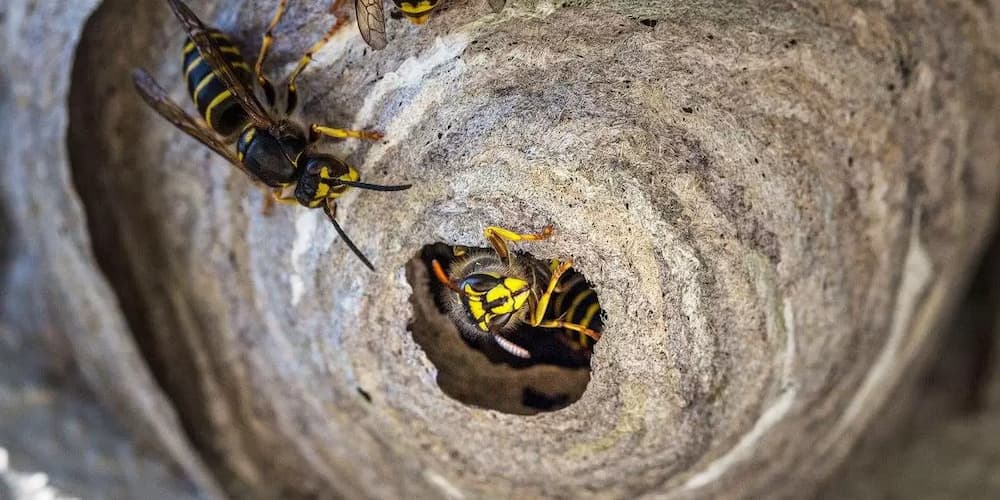
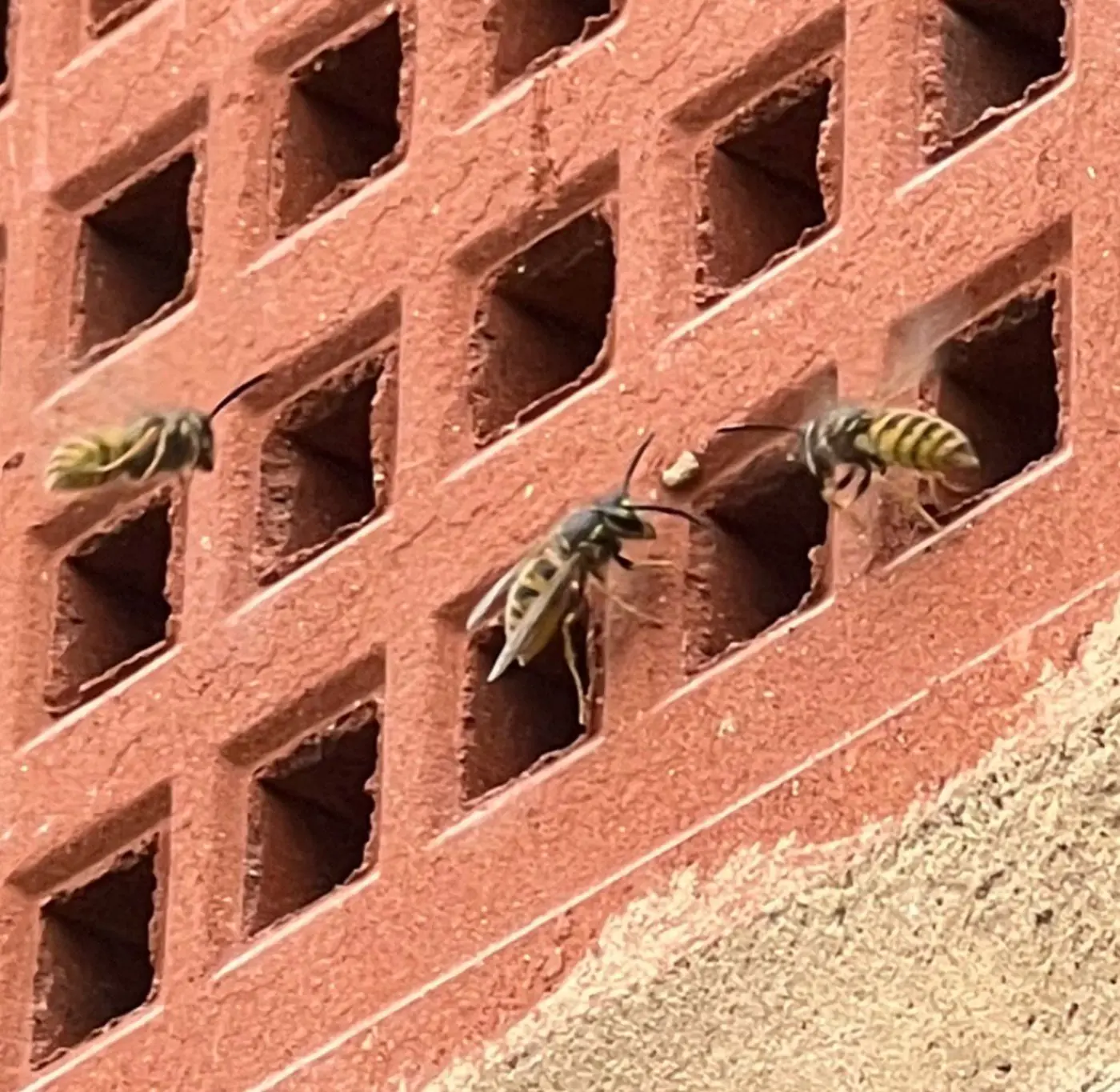
Soffits and eaves on older Harrogate and Knaresborough properties create perfect wasp nesting sites. The junction where roof meets wall often has small gaps providing nest access. Decorative Victorian eaves with ornate features create sheltered cavities wasps exploit. External soffits allow nest observation—residents notice wasps repeatedly entering and exiting specific points along the roofline. Internal soffits hide nests completely until wasp activity inside the property reveals the problem. Wall cavities in older properties with cavity wall construction provide another common nest location. Wasps access these through damaged mortar, gaps around utility pipes, or compromised airbricks. Wall cavity nests are particularly problematic because they’re completely hidden and can grow very large undetected.
Garden locations become increasingly common as properties expand into semi-rural areas around Harrogate and Knaresborough. Garden sheds throughout Pannal, Hookstone, Killinghall, and rural Knaresborough provide ideal nest sites. Sheds used only occasionally for garden equipment storage offer undisturbed space perfect for nest establishment. By the time residents need garden equipment in May or June, nests may already contain hundreds of workers. Mature hedgerows and trees in established Harrogate gardens hide nests in dense vegetation. These nests grow unnoticed until gardening activities or children playing near hedges disturb them, triggering defensive attacks.
Outbuildings, greenhouses, conservatories, and garden structures common in larger Harrogate properties all provide potential nest sites. The town’s character as a prosperous spa town with substantial Victorian and Edwardian properties means many homes have extensive gardens with multiple structures. Each represents a potential nest location. Ground nests occasionally occur in quiet undisturbed areas—under decking, in dense ground cover vegetation, or in disused rabbit burrows. These are less common but particularly dangerous because they’re invisible until someone steps near them.
Chimneys and roof spaces in period properties create additional nesting opportunities. Unused chimneys provide sheltered vertical spaces wasps exploit. Complex roof structures with multiple junctions, valleys, and architectural features characteristic of Victorian and Edwardian buildings create numerous potential nest sites. Properties in conservation areas throughout Harrogate and Knaresborough often have original architectural features preserved, including roof details that inadvertently provide perfect wasp habitat.
Professional Wasp Nest Removal: The Harrogate and Knaresborough Process
Professional wasp nest removal in Harrogate and Knaresborough follows a systematic approach ensuring safe effective elimination. Initial contact involves discussing the situation over the phone. We ask about wasp activity observed, suspected nest location, property accessibility, and any immediate concerns particularly regarding children or vulnerable individuals. This information helps us prioritise urgent situations and prepare appropriate equipment. We provide transparent pricing during this conversation—standard accessible nest removal costs £80-100 across Harrogate and Knaresborough including all HG postcodes.
Same-day or next-day service is available throughout Harrogate, Knaresborough, and surrounding areas. We prioritise emergency situations including nests near children’s play areas, in high-traffic property locations, or creating immediate danger. Properties across High Harrogate, Low Harrogate, Starbeck, Duchy Estate, Pannal, Knaresborough town center, Scotton, Scriven, and all surrounding villages receive equal priority. We understand wasp problems create genuine anxiety and work to respond as quickly as possible.
On-site assessment begins with careful observation identifying exact nest location and access points. We watch wasp flight patterns—wasps follow direct routes between nest entrance and foraging areas. Observing these flight paths reveals hidden nests. We assess nest size based on activity level and entrance traffic. Heavy constant traffic indicates large established colonies. Lighter sporadic activity suggests smaller developing nests. This assessment determines treatment approach and helps identify any access challenges requiring specialised equipment.
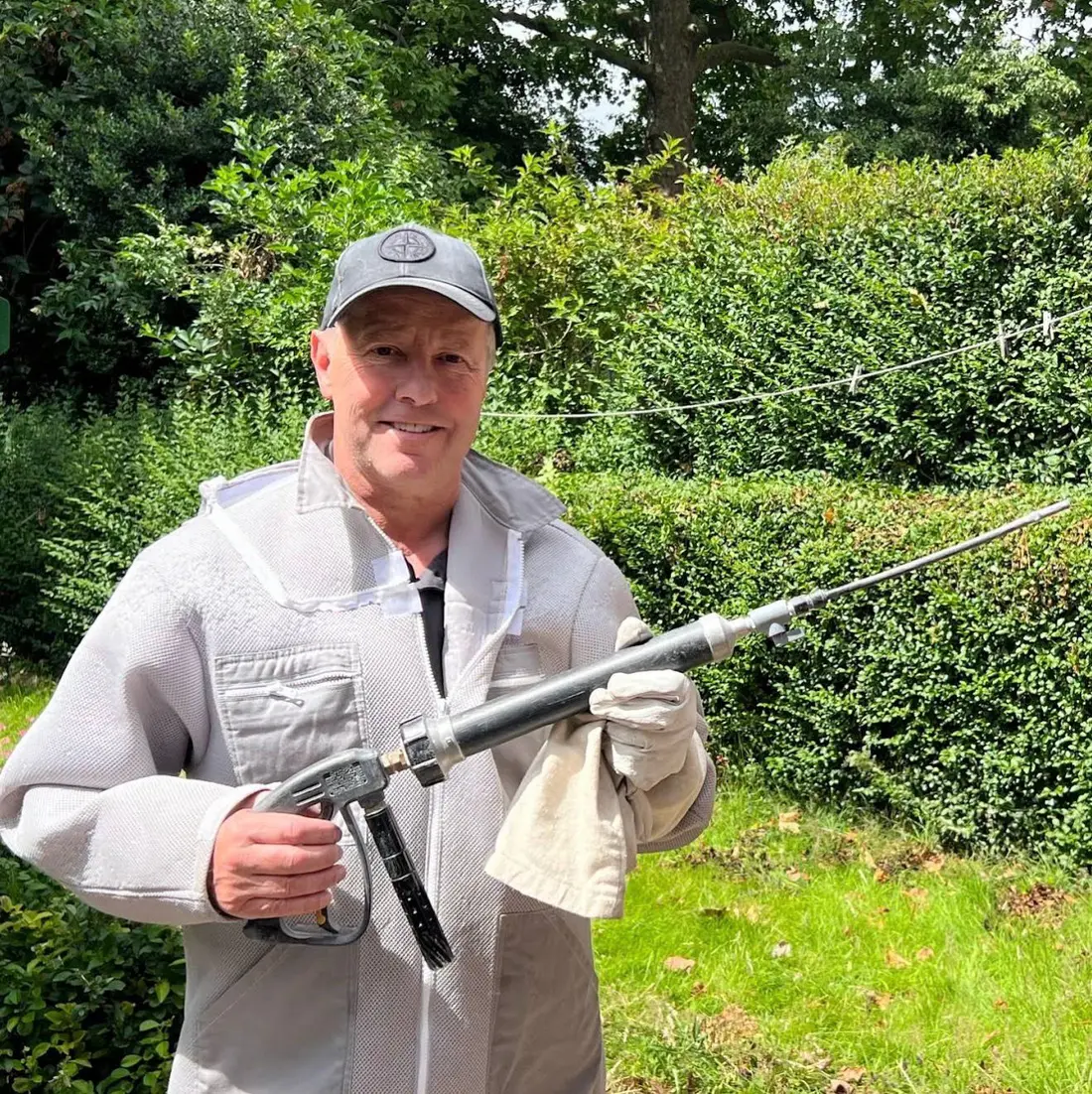
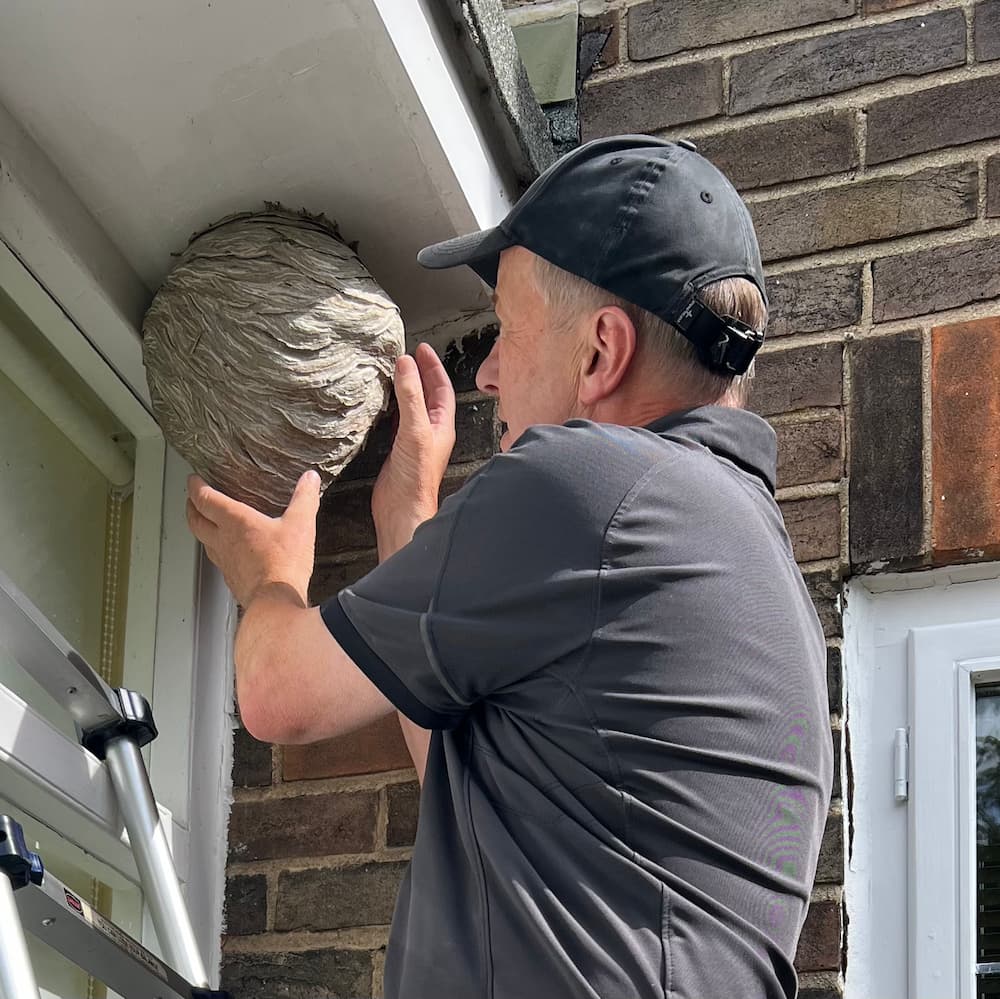
Treatment application uses professional-grade insecticides unavailable to homeowners and significantly more effective than retail products. We apply treatment directly to nest entrances ensuring wasps contact insecticide as they enter and exit. For accessible external nests, we use powder formulations that wasps carry into the nest on their bodies, spreading throughout the colony. For internal nests in lofts or wall cavities, we may use liquid or foam formulations depending on location and nest structure. Treatment takes approximately fifteen to thirty minutes depending on nest accessibility.
The insecticide works rapidly. Wasps contacting treatment die within hours. Wasps returning from foraging contact contaminated nest surfaces and other wasps, spreading insecticide throughout the colony. Within twenty-four hours, the entire nest becomes inactive as all wasps die. We don’t physically remove nests after treatment because they pose no further threat and naturally decompose over winter. Wasps never reoccupy old nests, so leaving treated nests in place causes no future problems. Dead wasps accumulate around nest entrances for several days post-treatment providing visible evidence the treatment succeeded.
Follow-up and guarantees provide peace of mind. We guarantee our wasp treatments throughout Harrogate and Knaresborough. If wasps return to the same location within the guarantee period, we retreat at no additional cost. This rarely happens because our professional treatments eliminate entire colonies. We provide advice on preventing future nests including sealing identified entry points and removing attractants. We’re available for questions or concerns after treatment, ensuring Harrogate and Knaresborough residents feel completely supported throughout the process.
Why DIY Wasp Nest Removal Fails in Harrogate
Many Harrogate and Knaresborough residents attempt DIY wasp nest removal using retail products before calling professionals. These attempts almost universally fail and create genuine danger. Understanding why DIY approaches fail helps residents make informed decisions protecting themselves and their families. Retail wasp products available in Harrogate hardware stores and supermarkets use significantly weaker insecticide formulations than professional products. These consumer-grade treatments might kill wasps contacting spray directly but rarely eliminate entire colonies. Nests contain hundreds to thousands of wasps. Spray reaching the nest entrance affects only wasps immediately present. The majority of the colony remains inside unaffected, continuing normal activity after the immediate threat passes.
Wasp defensive behavior makes DIY attempts extremely dangerous. Wasps defend nests aggressively when threatened. Disturbing a nest triggers release of alarm pheromones signaling danger to the entire colony. Every wasp capable of stinging responds to this chemical signal, emerging to attack the threat. A person attempting DIY removal can face simultaneous attacks from dozens or hundreds of wasps. Each wasp stings multiple times—unlike bees, wasps don’t lose their stingers and can sting repeatedly. Multiple wasp stings cause severe pain, significant swelling, and serious medical complications including anaphylactic shock in allergic individuals.
Harrogate Hospital treats casualties from failed DIY wasp nest removal every summer. These incidents range from numerous stings requiring medical attention through to severe allergic reactions requiring emergency treatment. The £10-30 cost of retail wasp spray seems economical compared to £80-100 professional removal until you factor in potential hospital visits, time off work recovering from stings, and the stress and fear the experience creates. Professional removal eliminates these risks entirely while costing less than many people spend on multiple failed DIY attempts.
Access and equipment limitations further doom DIY efforts. Many nests in Harrogate and Knaresborough properties occupy locations difficult or dangerous for homeowners to reach. Loft nests require navigating loft spaces safely while being attacked by disturbed wasps. High roof soffits need ladder work at height while defending against stings. Wall cavity nests are completely inaccessible to homeowners lacking proper equipment. Professional pest controllers have specialised equipment including protective suits, extension lances for treating high nests, and professional-grade insecticides designed for complete colony elimination.
Timing and lifecycle knowledge separates professional success from DIY failure. Experienced pest controllers understand wasp behavior, activity patterns, and lifecycle stages. We know optimal treatment times—treating at dusk when wasps are inside the nest ensures maximum colony exposure to insecticide. We understand seasonal variations—April queens behave differently than August workers. This knowledge ensures effective treatment. DIY attempts often occur at wrong times using inappropriate methods, guaranteeing failure while maximising danger.
The false economy of DIY becomes apparent when homeowners spend money on multiple failed attempts then call professionals anyway. A resident might spend £15 on wasp spray in June, another £20 on a different product in July, and finally call professionals in August after being stung during a third DIY attempt. They’ve now spent £35 plus endured stings and stress, then pay the professional fee they could have paid initially. Professional removal in April would have cost £80-90 and prevented the entire problem. Professional removal in August costs the same but comes after months of stress and danger. Either way, professional service proves more economical than the DIY approach.
Wasp Prevention for Harrogate and Knaresborough Properties
Preventing wasp nest establishment costs nothing and eliminates summer problems entirely. Harrogate and Knaresborough residents can implement effective prevention with minimal effort. Spring inspection during March and April identifies potential nest sites before queens occupy them. Walk around your property exterior checking soffits, eaves, airbricks, and roof details. Look for gaps or holes wasps could exploit. Check garden sheds, outbuildings, and greenhouses for entry points. Inspect loft spaces if safely accessible, looking for gaps in soffits or damaged roof tiles visible from inside.
Sealing entry points prevents nest establishment. Small gaps in soffits are easily sealed with appropriate filler or mesh. Damaged airbricks should be replaced or fitted with mesh covers. Gaps around utility pipes entering properties can be sealed with expanding foam or similar products. These simple maintenance tasks prevent wasp access to ideal nesting sites inside your Harrogate or Knaresborough property. External preventive work should be completed before April when queens become active. Once a nest is established, sealing entry points becomes dangerous because trapped wasps will aggressively seek alternative exits, potentially entering living spaces.
Removing attractants reduces wasp activity around properties even if you can’t prevent all nesting. Keep outdoor bins sealed and clean them regularly. Don’t leave fallen fruit on the ground under fruit trees. Clean up food and drinks promptly after outdoor dining. Cover food at barbecues and garden parties. These measures won’t prevent nest establishment but reduce the likelihood of wasps choosing sites near high-activity areas. Properties in Harrogate and Knaresborough with large gardens should pay particular attention to compost bins—rotting fruit attracts wasps. Use bins with secure lids and avoid adding large quantities of sweet fruit waste.
Garden maintenance contributes to prevention particularly in larger Harrogate properties. Trim hedges and vegetation away from building walls and roof lines. This reduces sheltered nest sites and makes inspection easier. Keep garden sheds organized rather than cluttered—regular use and activity discourages queens from selecting these locations. However, understand that prevention has limits. Wasps are persistent and resourceful. Even well-maintained properties can experience nest establishment. The goal is reducing likelihood, not guaranteeing prevention.
Professional spring surveys offer the highest level of prevention for properties particularly concerned about wasps. We conduct detailed inspections during March and April, identifying all potential nest sites and early queen activity. We can remove any nests discovered during establishment phase when they’re tiny and queens are working alone. This early intervention costs the same as later removal but prevents months of worry and eliminates any possibility of summer problems. Properties with previous wasp issues or those in high-risk locations—near woodland, with extensive gardens, or Victorian buildings with numerous potential nest sites—benefit most from professional spring surveys.
When to Call Professional Wasp Removal in Harrogate
Certain situations require immediate professional attention rather than waiting or attempting DIY solutions. Discovering any wasp nest regardless of size warrants professional removal. Even small spring nests grow rapidly into dangerous summer colonies. Small nests are cheapest and safest to remove, making early discovery ideal timing for professional action. Don’t wait to see if nests grow larger or activity increases—this guarantees problems worsen while costs remain similar.
Wasp activity around high-traffic areas demands urgent professional response. Nests near children’s play equipment, main entrance doors, frequently used garden areas, or outdoor dining spaces create immediate danger. Children are particularly vulnerable to wasp stings due to curious behavior and inability to remain calm around wasps. Elderly or vulnerable individuals may have medical conditions making wasp stings more dangerous. Properties throughout Harrogate and Knaresborough with these situations should prioritise same-day professional removal.
Multiple wasp sightings inside your property indicate nearby nest presence requiring investigation and removal. Wasps entering living spaces suggest nests in loft spaces, wall cavities, or nearby external locations with access routes allowing interior penetration. Don’t ignore internal wasp activity hoping it resolves naturally. This situation only worsens as colonies grow and wasp numbers increase. Professional inspection identifies nest locations and eliminates the problem completely.
Commercial properties in Harrogate and Knaresborough require professional wasp management for liability and regulatory compliance. Restaurants, cafes, hotels, retail premises, and any business serving customers cannot risk wasp incidents. Environmental Health standards require effective pest management. Customer complaints or online reviews mentioning wasp problems damage business reputation severely. Professional wasp control for Harrogate and Knaresborough businesses provides guaranteed elimination, documented treatment for compliance purposes, and protection against liability from customer stings.
Attempted DIY removal resulting in stings or failed treatment demands immediate professional intervention. If you’ve been stung attempting wasp removal, don’t try again. Professional removal protects you from additional stings while eliminating the nest that’s now more defensive after disturbance. If retail products failed to eliminate wasp activity, don’t purchase additional products. Professional treatment uses different more effective methods unavailable in retail products. Call professionals after one failed DIY attempt rather than multiple unsuccessful dangerous efforts.
Harrogate and Knaresborough Wasp Nest Removal Service
Yor-Pest Control provides professional wasp nest removal throughout Harrogate and Knaresborough covering all areas including High Harrogate, Low Harrogate, Starbeck, Duchy Estate, Pannal, Hookstone, Killinghall, Knaresborough town center, Scotton, Scriven, and all surrounding villages. We serve all HG postcodes with same-day and next-day service available for urgent situations. Our twenty years serving the area means we understand local property types, common nest locations in Victorian and Edwardian buildings, and seasonal patterns affecting both towns.
Professional treatment costs £80-100 for standard accessible nests throughout Harrogate and Knaresborough. This includes same-day or next-day service, professional-grade insecticide treatment, complete nest elimination within twenty-four hours, and comprehensive guarantees. We provide transparent pricing during initial phone contact with no hidden costs or call-out fees. We’re available seven days per week including evenings and weekends for wasp emergencies.
Our service includes complete nest elimination using professional products, guaranteed results with free retreatment if needed, expert advice on prevention and property maintenance, and same-day availability for urgent situations prioritising family safety. We understand wasp problems create genuine anxiety particularly when children or vulnerable individuals are affected. We work quickly to eliminate threats while explaining the process clearly so you understand what to expect.
If you’ve discovered a wasp nest in your Harrogate or Knaresborough property, noticed increased wasp activity around your home or business, or want to prevent wasp problems through spring inspection, contact us today for professional honest service.
Call us now on 07951 392 424 for wasp nest removal in Harrogate and Knaresborough, or visit our wasp nest removal page for more information about our services throughout the area. Don’t risk DIY wasp removal. Professional help eliminates nests safely protecting your family while costing less than multiple failed DIY attempts.