March in York and Harrogate marks a critical transition in the wasp calendar. While most residents are enjoying the first signs of spring, wasp queens are emerging from hibernation, scouting locations, and beginning the process that will create nests containing thousands of wasps by summer. Understanding this seasonal timing is crucial for anyone wanting to avoid wasp problems in their York or Harrogate property.
This complete guide from Yor-Pest Control covers everything York and Harrogate residents need to know about wasp nest removal including seasonal timing and why spring matters, common nest locations in York and Harrogate properties, the professional removal process, why DIY attempts are dangerous, and how to prevent wasp problems before they start.
If you’re reading this in March or April, you’re at exactly the right time to take preventive action. If you’re reading later in the year and already have a wasp problem, you’ll understand why early intervention matters and what professional removal involves.
Contents
- 1 The Wasp Season in York and Harrogate: What to Expect
- 2 Common Wasp Nest Locations in York and Harrogate Properties
- 3 Why Professional Wasp Nest Removal Matters
- 4 The Professional Removal Process
- 5 Seasonal Timing: Why Spring Intervention Matters
- 6 Geographic Considerations: York vs Harrogate
- 7 What Attracts Wasps to York and Harrogate Properties
- 8 Prevention: Reducing Wasp Attraction
- 9 Frequently Asked Questions
- 10 Professional Wasp Nest Removal Across York and Harrogate
The Wasp Season in York and Harrogate: What to Expect
Understanding wasp behavior throughout the year helps explain why timing matters so critically for nest removal and prevention.
March-April: Queen Emergence and Nest Establishment
This is where we are now. After overwintering in sheltered locations, wasp queens emerge when daytime temperatures consistently exceed 10-12°C. In York and Harrogate, this typically happens in late March through April, though mild springs can see activity starting in early March.
Queens spend several weeks feeding to rebuild their energy reserves depleted during hibernation. They visit early-flowering plants, tree sap, and any available sugary substances. During this period, you might see individual large wasps around your York or Harrogate property. These are queens searching for suitable nest sites.
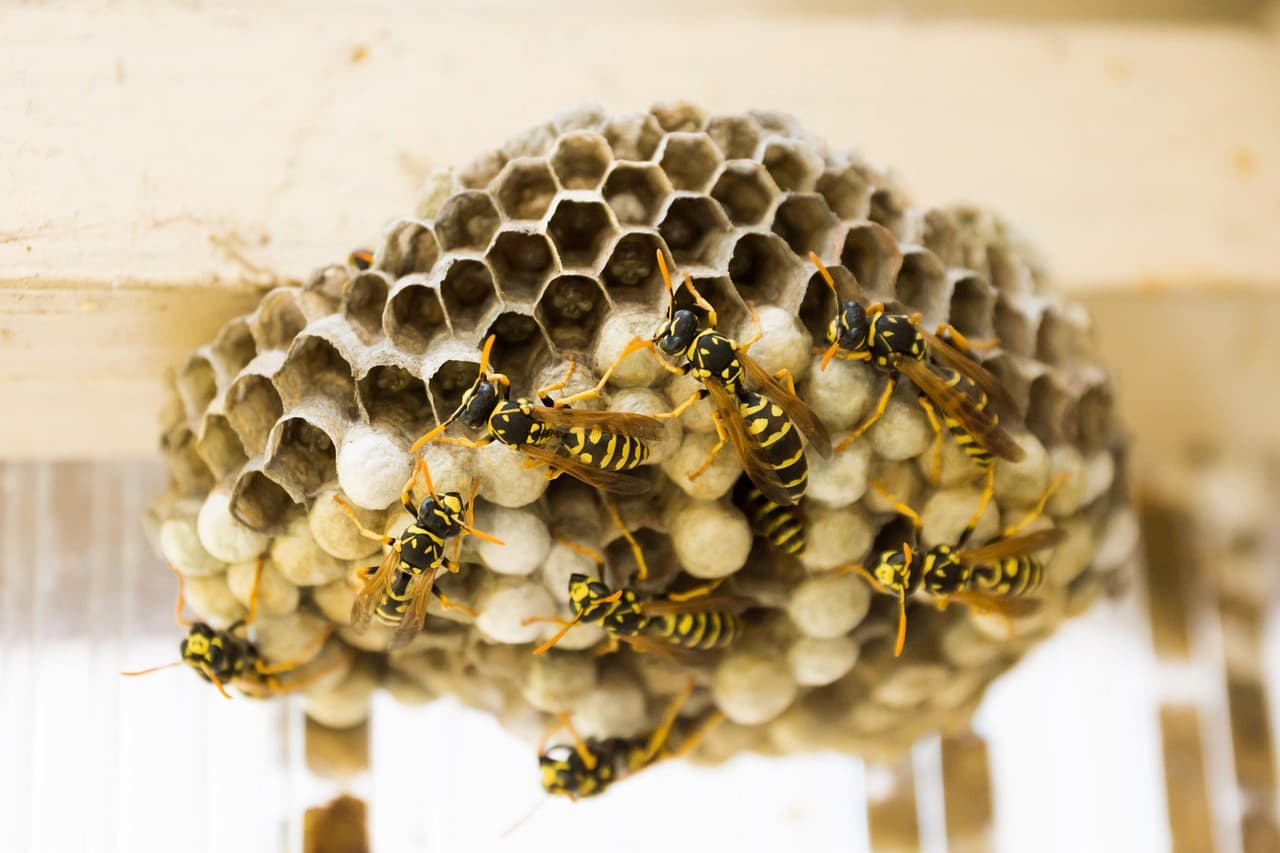
Once a queen selects a location, she begins building. The initial nest is tiny—golf ball sized—and contains just a few cells where she lays her first eggs. She tends these alone, feeding emerging larvae until they develop into worker wasps. This establishment phase takes approximately 4-6 weeks.
This early spring period offers the absolute best opportunity for intervention. Queens are vulnerable, nests are tiny, and removal is simple. A nest discovered and removed in April prevents the summer problem entirely.
May-June: Growth Phase
By May, the first worker generation emerges. These workers take over nest building and foraging while the queen focuses solely on egg laying. Nest growth accelerates rapidly. What was a golf ball in April becomes tennis ball sized by late May and football sized by mid-June.
Worker populations explode during this phase. A nest with 50 workers in early May might have 500 by month’s end. York and Harrogate residents start noticing increased wasp activity around properties during this period. This is when most people first realize they have a nest.
May and June represent the last relatively easy period for nest removal. Nests are still manageable sizes, and worker populations, while growing, haven’t reached their dangerous summer peaks.
July-August: Peak Season
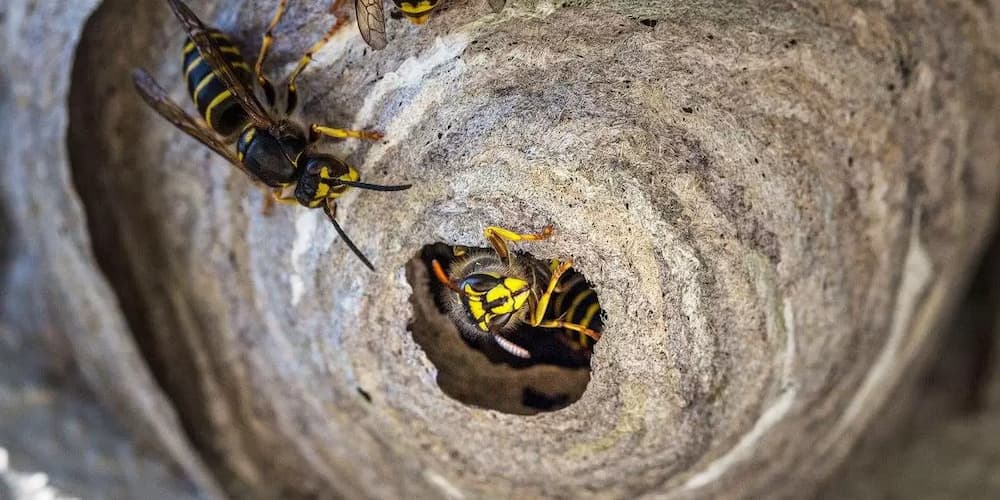
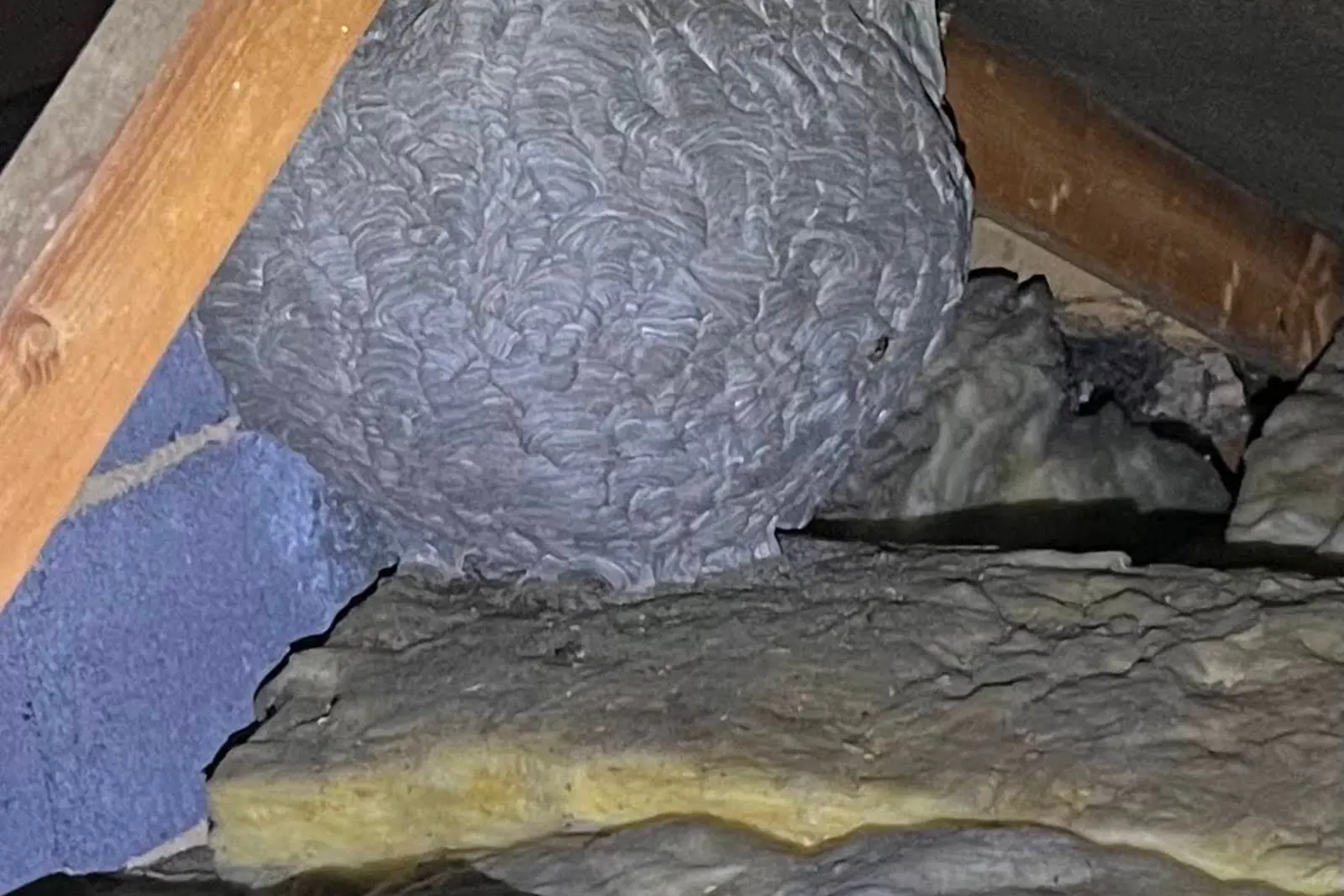
Peak wasp season in York and Harrogate runs through July and August. Nests reach maximum size and population. A mature nest can contain 5,000-10,000 wasps depending on species and conditions. The nest itself can be the size of a basketball or larger.
Worker wasps become noticeably more aggressive during peak season. They’re defending substantial nests containing the colony’s reproductive future. Any perceived threat triggers mass defensive responses. This is when wasp stings peak, when people get attacked mowing lawns near hidden nests, and when DIY removal attempts most frequently send people to hospital.
Professional removal during peak season is essential rather than optional. The numbers involved make any amateur approach extremely dangerous.
September-October: Decline and Aggression
By September, nest activity changes. Queens stop laying eggs. The colony’s purpose—producing new queens and males—is complete. Worker wasps, no longer needed for nest maintenance, become noticeably more aggressive and less focused. They’re attracted to sweet foods and drinks, creating problems at outdoor gatherings.
By October in York and Harrogate, nests are dying naturally. Workers die off, new queens disperse to find hibernation sites, and nests become inactive. By November, they’re completely abandoned and won’t be reused.
However, September wasps are often the most aggressive of the year. Their colony is doomed, they have nothing to lose, and they respond to perceived threats with extreme aggression. Late season removal remains important for safety even though nests are naturally declining.
Common Wasp Nest Locations in York and Harrogate Properties
York and Harrogate’s predominantly Victorian and Edwardian housing stock creates ideal wasp nesting opportunities. Understanding where wasps commonly build helps with early detection.
Loft Spaces and Roof Voids
Lofts represent prime wasp nesting territory. They offer shelter from weather, protection from predators, stable temperatures, and undisturbed spaces where nests can grow unchallenged. Most York and Harrogate properties have accessible lofts that homeowners rarely visit except for storage access, meaning nests can establish and grow for months before discovery.
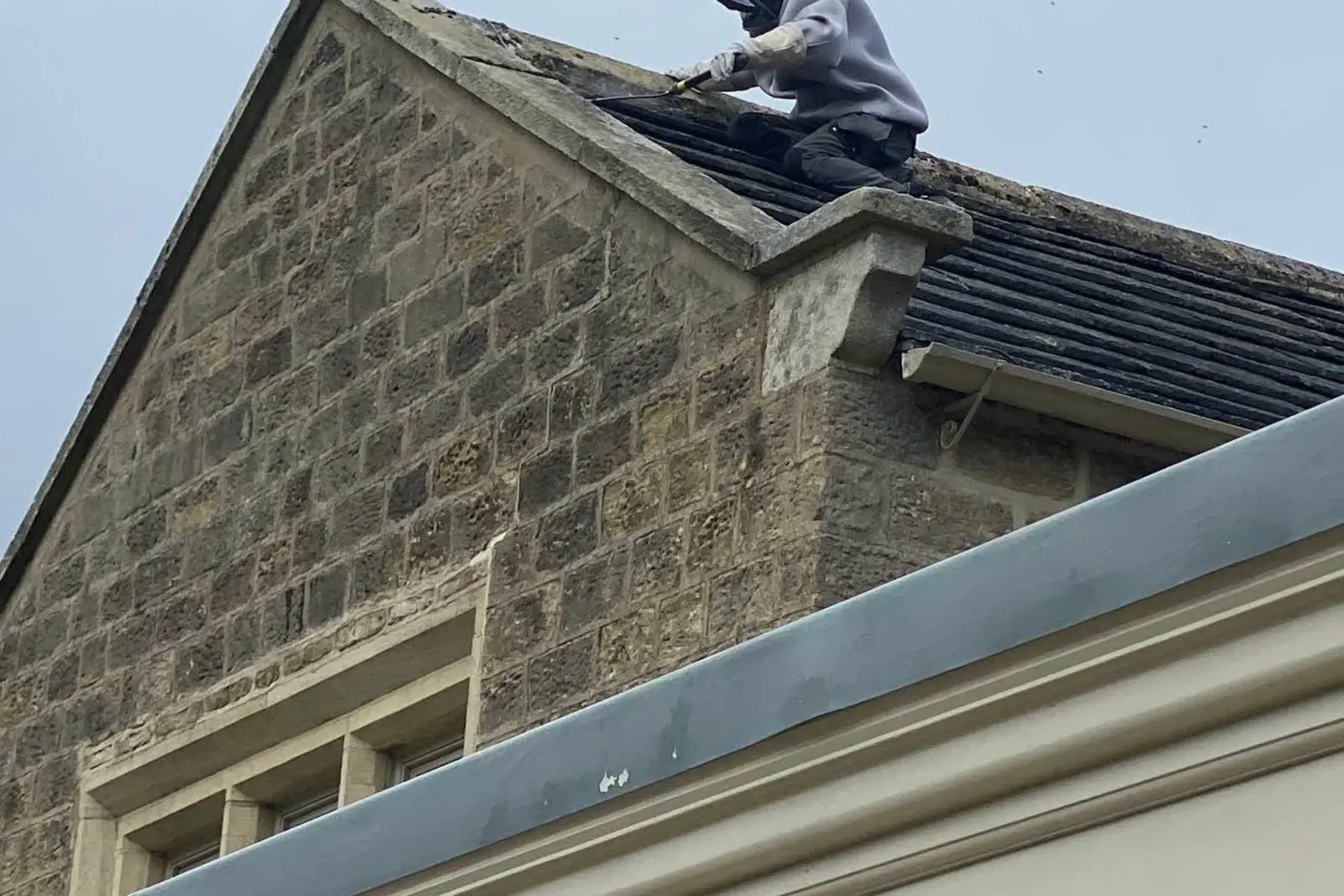
Wasps access lofts through surprisingly small gaps. Missing roof tiles, damaged soffits, gaps where utilities enter the building, and ventilation points all provide entry. Once inside, they typically build nests in roof corners, attached to rafters, or in wall cavities accessible from the loft.
Signs of loft nests include wasps entering roof spaces near eaves or soffits, buzzing sounds audible from upstairs rooms, and wasps appearing inside the house from ceiling light fittings or loft hatches.
Soffits and Eaves
The soffits running beneath roof overhangs are extremely common wasp nest locations in York and Harrogate. These spaces offer weather protection while remaining accessible for wasp entry and exit. Damaged soffit panels, gaps where soffits meet walls, and ventilation slots all provide ideal access points.

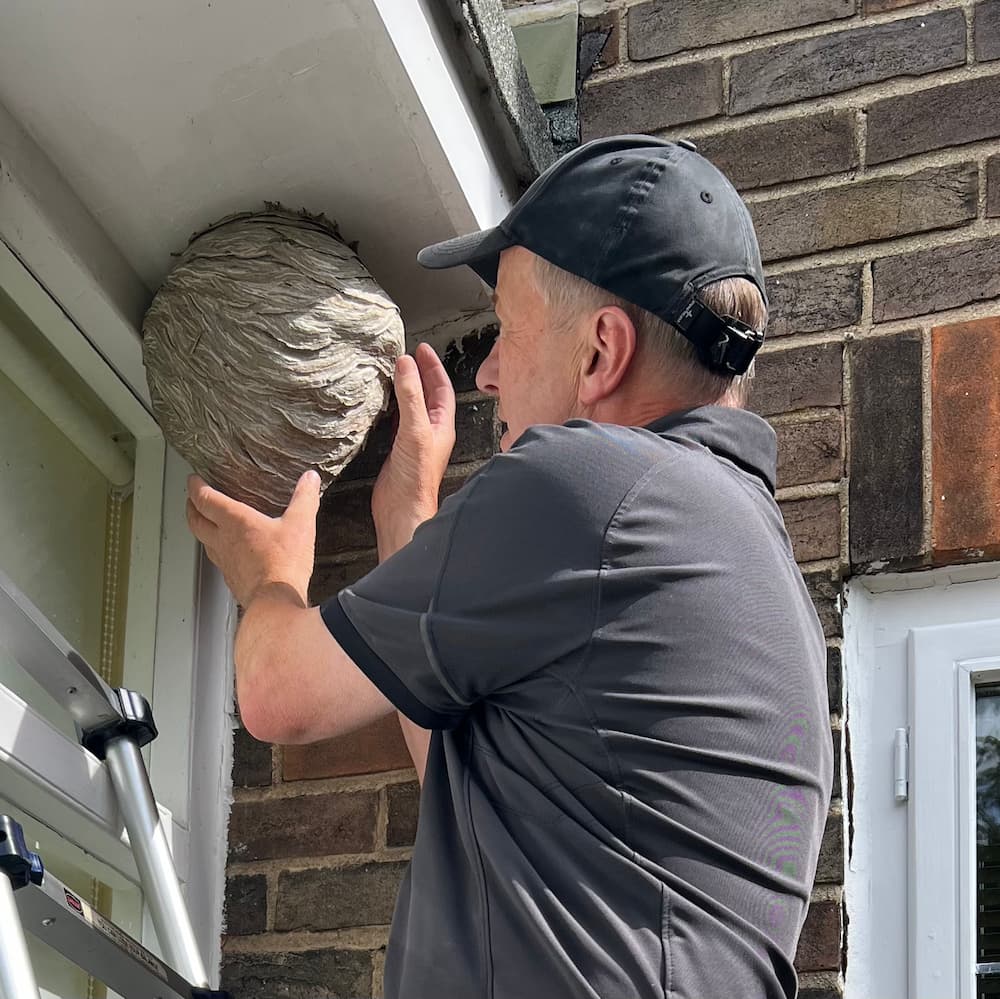
Soffit nests are often visible from ground level once you know where to look. You’ll see wasps entering and exiting a specific point, often with multiple wasps visible simultaneously during active periods. The nest itself might be visible through gaps or damage in soffit panels.
These locations present particular challenges for removal. Working at height requires proper equipment and safety measures. The confined spaces within soffits make nest access difficult. Professional removal becomes essential rather than optional for soffit nests.
Wall Cavities
Victorian and Edwardian properties throughout York and Harrogate feature cavity wall construction. These cavities—the air gap between inner and outer brick walls—provide excellent protected spaces for wasp nests. Wasps access them through airbricks, gaps around windows or doors, damaged mortar, or utility entry points.
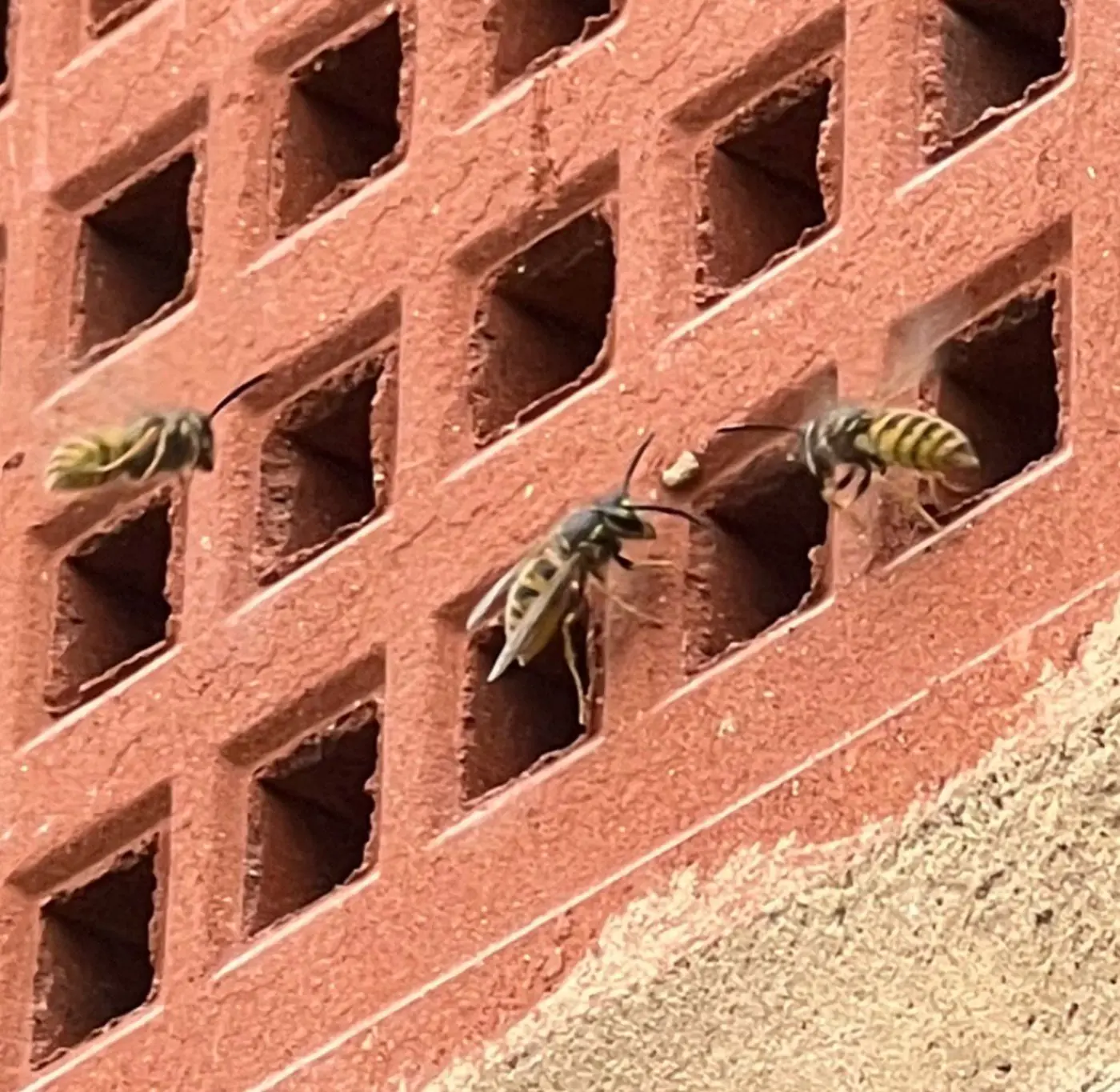
Cavity nests are particularly problematic because they’re completely hidden. The only evidence is wasps entering and exiting at specific points on external walls. The nest might be substantial before anyone realizes it exists. Additionally, cavity nests sometimes extend through multiple wall sections, creating large distributed nests difficult to treat effectively.
Garden Locations
Not all wasp nests are in buildings. Ground nests in York and Harrogate gardens are relatively common, particularly in areas with established vegetation and wildlife. Wasps utilize abandoned rodent burrows, gaps under sheds or decking, spaces in compost heaps, and cavities in tree roots or stumps.
Ground nests are especially dangerous because people encounter them unexpectedly. Someone mowing the lawn or gardening suddenly finds themselves directly above or next to a nest entrance, triggering immediate mass attack responses from defending wasps.
Dense hedgerows and mature trees also host aerial nests built in branches or within dense foliage. These remain hidden until autumn leaf fall reveals them, though wasp activity around the area usually indicates their presence during summer.
Sheds, Garages, and Outbuildings
Garden sheds, garages, and outbuildings throughout York and Harrogate provide ideal wasp nesting opportunities. They’re typically less frequently accessed than main dwellings, offer multiple entry points, and contain quiet undisturbed spaces perfect for nest building.
Wasps build nests in shed rafters, attached to garage walls, inside stored items like old furniture or equipment, and in gaps around doors or windows. The first indication is often wasps swarming around or inside the building when you open it.
Chimneys and Flues
Disused chimneys in York and Harrogate’s older properties sometimes host wasp nests. The chimney structure provides excellent protection and the flue offers a ready-made entry point. Signs include wasps entering or exiting the chimney pot, buzzing sounds from the chimney breast, and occasionally wasps entering rooms through open fireplaces.
Chimney nests require specialist removal approaches due to access difficulties and the risk of nests falling into fireplaces during treatment.
Why Professional Wasp Nest Removal Matters
Every summer, York Hospital and Harrogate District Hospital treat numerous wasp sting victims who attempted DIY nest removal. The pattern is depressingly consistent: someone discovers a nest, buys wasp killer spray from a local shop, attempts treatment, and ends up with multiple stings requiring emergency treatment.
The Danger of DIY Removal
The retail wasp killer products sold in York and Harrogate supermarkets and hardware stores are designed for individual wasps or very small nests. They’re inadequate for established nests containing hundreds or thousands of wasps. The spray range of retail products is typically 3-4 meters, requiring you to get dangerously close to nests.
When you spray a wasp nest with retail products, several things happen immediately. Wasps detect the chemical attack and release alarm pheromones. These pheromones trigger mass defensive response from all wasps in the nest. Hundreds or thousands of wasps erupt from the nest simultaneously, all targeting the threat—you. Retail spray cans deplete quickly, often before you’ve adequately treated the nest. You’re left defensively retreating while wasps pursue.
Multiple wasp stings cause serious medical issues. Even people with no previous wasp allergy can develop anaphylactic shock from multiple stings. The venom load from 20+ stings overwhelms the immune system. Wasps, unlike bees, can sting repeatedly, with individual wasps potentially delivering 5-10 stings during an attack.
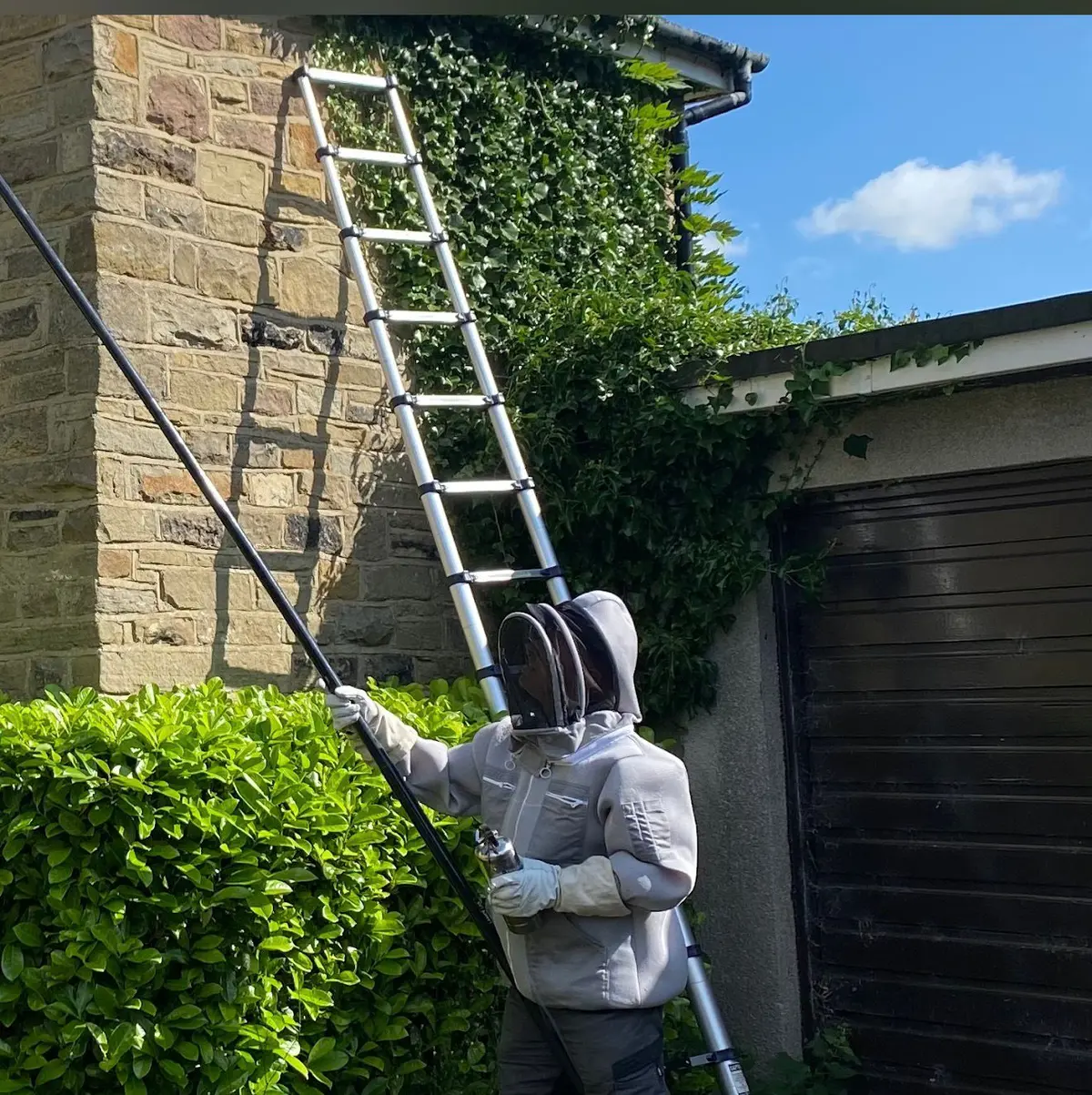
Professional Equipment and Techniques
Professional wasp nest removal succeeds because we use completely different equipment and approaches than DIY attempts.
Our professional insecticides are significantly more potent than retail products. They’re formulated specifically for wasp nest treatment with rapid knockdown effect. Crucially, they’re only available to licensed professionals who understand proper application methods and safety protocols.
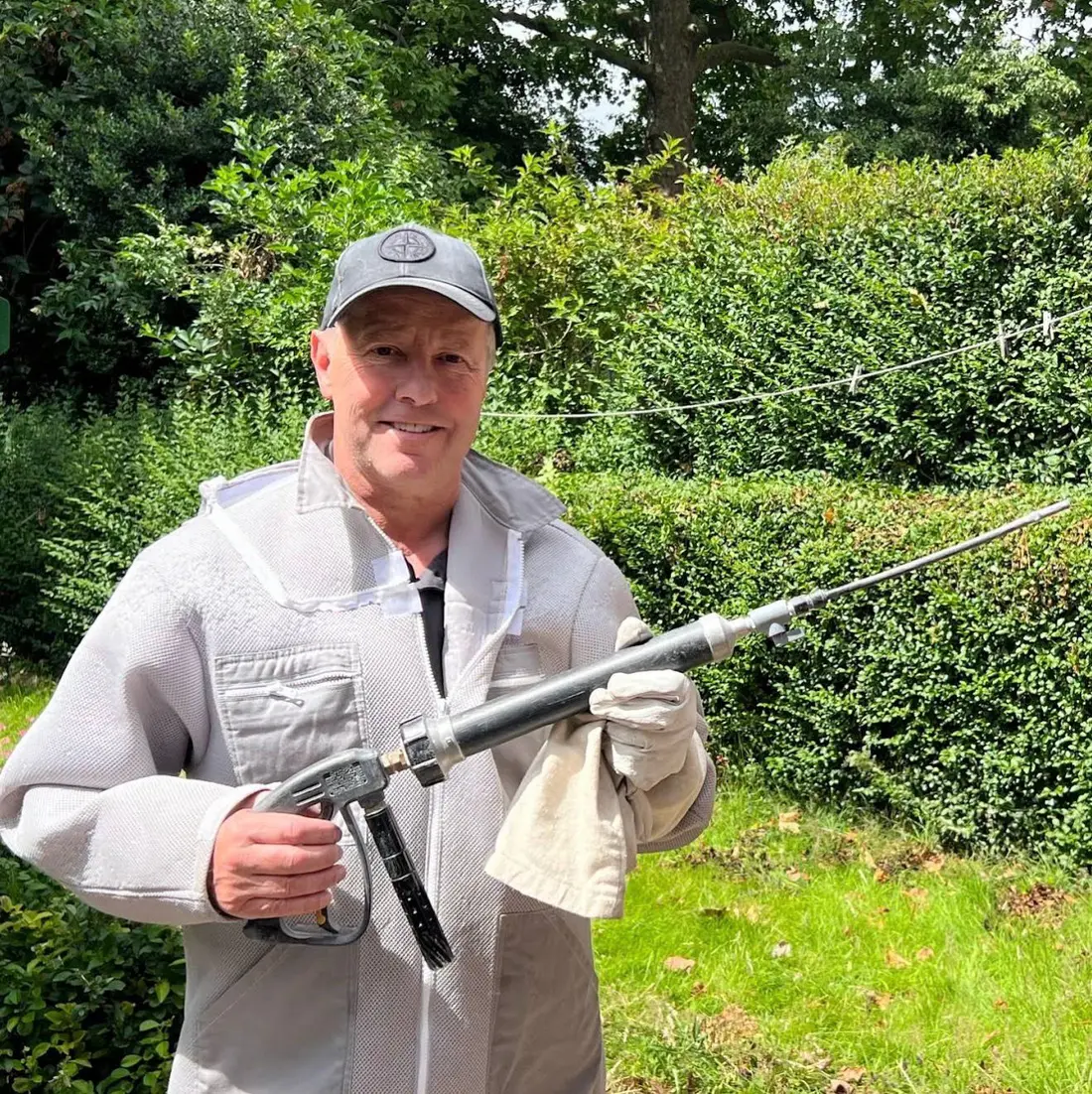
We use specialized application equipment including extension lances allowing treatment from 5-8 meters distance, high-pressure sprayers delivering insecticide deep into nest structures, and dust formulations for cavity and ground nests that wasps carry throughout the nest structure.
Full protective equipment is mandatory for all wasp nest treatments. This includes bee suits with sealed fastenings preventing wasp access, face protection with multiple layers of mesh, sealed gloves and boots, and respiratory protection when using certain insecticide formulations.
Perhaps most importantly, professional experience teaches recognition of nest types, appropriate treatment approaches for different locations, defensive behavior patterns indicating when to retreat temporarily, and seasonal variations affecting nest activity and treatment timing.
The Professional Removal Process
Understanding what professional wasp nest removal involves helps explain why it succeeds where DIY fails and why the cost represents good value for safety and guaranteed results.
Initial Assessment
When you call Yor-Pest Control about a wasp problem in York or Harrogate, we first establish the situation through questions about where wasps are being seen, approximate numbers of wasps visible, time of day activity is highest, how long the problem has been noticed, and whether anyone has already attempted DIY treatment.
This information helps us prepare appropriate equipment and schedule treatment at optimal times. Early morning or evening treatments when wasps are less active generally proceed more smoothly than midday treatments during peak activity.
Upon arrival, we conduct external inspection identifying actual nest location by observing wasp flight patterns. Wasps fly directly to and from nest entrances in consistent routes. Watching these patterns for a few minutes usually reveals exact nest location even for hidden cavity or ground nests.
We assess the nest size based on wasp numbers and activity levels. This determines treatment approach and helps estimate how long treatment will take. We also identify any complications like difficult access, proximity to areas requiring protection, or structural damage around nest entry points needing mention to the property owner.
Treatment Application
Treatment approaches vary depending on nest location and type. For accessible aerial nests in lofts, sheds, or visible on buildings, we apply professional-grade insecticide spray directly to the nest entrance and body. The spray penetrates the nest structure, killing wasps on contact and leaving residual insecticide that kills wasps returning over the following hours.
Cavity nests require dust formulation insecticides. We apply insecticidal dust into the cavity through nest entrance points. Wasps moving through the cavity contact the dust and carry it throughout the nest structure, distributing insecticide comprehensively. This approach ensures complete nest treatment even when the actual nest location within the cavity is unknown.
Ground nests receive similar dust treatment. We apply dust directly into entrance holes. Wasps entering and exiting contact the dust, spreading it throughout the underground nest structure. Ground nests often have multiple entrance points that all require treatment.
Soffit and high-level nests often require extension equipment allowing us to treat from ground level safely. Professional lances extend reach to 8 meters, covering most residential nest situations without requiring dangerous ladder work.
Post-Treatment and Follow-Up
Immediately after treatment, we advise residents to stay clear of the treated area for 24 hours. The nest remains active during this period, with wasps dying gradually. Approaching the nest during this period could still trigger defensive responses from dying wasps.
Within 24 hours, the nest becomes completely inactive. Dead wasps accumulate around the entrance. Returning forager wasps contact the insecticide and die quickly. By 48 hours post-treatment, the nest is entirely dead with no live wasps remaining.
We don’t physically remove nests after treatment. Wasp nests are made of paper-like material created by wasps chewing wood fibers. They naturally decompose over time and won’t be reused. Leaving them in place actually provides evidence deterring future queens from choosing the same location—wasps avoid nesting near old nest sites.
Our service includes a guarantee period. If wasp activity resumes at the same location within the guarantee period, we return and retreat at no additional cost. This rarely occurs with proper initial treatment but provides peace of mind.
Seasonal Timing: Why Spring Intervention Matters
We’re currently in March as this guide is published. This timing is crucial for anyone wanting to prevent wasp problems in their York or Harrogate property during the coming summer.
The March-April Opportunity
Queens emerging now are vulnerable. They’re alone, exhausted from hibernation, and focused on feeding and nest site selection rather than defense. A single queen found and eliminated prevents an entire nest containing thousands of wasps by August.
Early nests are tiny and easy to spot for those who know where to look. Regular inspection of common nesting sites during March and April often reveals golf-ball sized nests that can be removed with minimal risk and cost.
Professional spring prevention service involves inspecting properties for potential nest sites, identifying and sealing common wasp entry points, removing any early nests found during inspection, and advising on environmental modifications reducing nest site attractiveness.
This preventive approach costs less than summer emergency removal and provides complete season-long protection rather than reactive problem-solving.
The Cost of Waiting
Many York and Harrogate residents first notice wasp problems in July or August when nests are fully established and populations peak. By this point, what could have been a simple £60 early removal in April has become a £100-150 difficult removal involving dangerous numbers of wasps.
More significantly, established nests create ongoing problems throughout summer. Children can’t play safely in gardens. Outdoor dining becomes impossible. Simply mowing the lawn near a ground nest can trigger attacks. The quality of life impact substantially outweighs the modest cost of professional early removal.
Geographic Considerations: York vs Harrogate
While wasp behavior is consistent across North Yorkshire, York and Harrogate properties present different challenges affecting nest locations and removal approaches.
York Property Characteristics
York’s city center contains significant medieval and Georgian building stock alongside Victorian terraces in areas like Clifton, Heworth, and Tang Hall. These older properties offer numerous nesting opportunities through their age and construction methods.
Medieval timber-frame buildings have countless gaps and voids. Georgian properties feature complex roof structures with multiple nesting sites. Victorian terraces have cavity walls and loft spaces ideal for wasps. More modern suburbs still contain older sheds, garages, and outbuildings providing nesting sites.
York’s relatively urban environment concentrates wasp activity around properties and gardens. Limited green space means wasps focus their attention on residential areas, increasing human-wasp interactions.
Harrogate Property Features
Harrogate’s predominantly Victorian and Edwardian housing stock throughout areas like High Harrogate, Low Harrogate, and surrounding villages creates specific wasp challenges. These properties were built during an era prioritizing aesthetic features like decorative eaves, complex rooflines, and substantial loft spaces—all creating perfect wasp nesting opportunities.
Harrogate’s more affluent areas feature larger properties with extensive gardens, multiple outbuildings, and mature landscaping. This provides more potential nesting sites per property than typical urban areas. The town’s semi-rural nature, particularly in areas bordering countryside, means higher baseline wasp populations than purely urban locations.
Both cities require professional understanding of local property types and common nest locations. Our experience across York and Harrogate properties means we know where to look and what approaches work best for different building styles.
What Attracts Wasps to York and Harrogate Properties
Understanding what makes properties wasp-attractive helps with prevention even before nests establish.
Food sources are primary attractants. Properties with fruit trees dropping overripe fruit, compost bins containing food waste, outdoor bins not kept sealed, and areas where sweet drinks or food are consumed regularly all attract foraging wasps. Once wasps identify a reliable food source, they communicate its location to nestmates, concentrating wasp traffic around the area.
Shelter and nesting sites matter equally. Properties with multiple outbuildings, sheds, or garages, overhanging eaves and complex rooflines, mature hedgerows and dense vegetation, and roof damage or missing tiles all offer attractive nesting locations. Victorian and Edwardian properties throughout York and Harrogate combine all these features, explaining why they’re particularly prone to wasp problems.
Water sources attract wasps during dry summer periods. Garden ponds, water features, bird baths, and even dripping outdoor taps all draw wasps seeking water for nest construction and cooling.
Prevention: Reducing Wasp Attraction
While professional nest removal is necessary once wasps establish, prevention reduces the likelihood of problems developing.
Spring property inspection identifies potential nest sites before wasps choose them. Check loft spaces for early nests, inspect soffits and eaves for damage providing access, examine sheds and outbuildings for gaps and holes, and look for wall cavity entry points around the property perimeter.
Sealing entry points prevents access to prime nesting locations. Repair damaged soffits and fascia boards, seal gaps around pipes and utilities, fit mesh over airbricks and ventilation points, and maintain good roof condition eliminating missing tiles.
Managing food sources reduces wasp attraction. Collect fallen fruit promptly, keep compost bins sealed, ensure outdoor bins close properly, and clean up after outdoor eating promptly removing food and drink residue.
Garden maintenance eliminates potential nesting sites. Trim hedges and vegetation maintaining them below density wasps prefer, remove dead trees or stumps, keep sheds and outbuildings organized rather than cluttered with nesting opportunities, and fill rodent burrows promptly before wasps can colonize them.
Frequently Asked Questions
When is the best time to remove wasp nests in York and Harrogate?
March through May offers the best opportunity for wasp nest removal in York and Harrogate. Early season nests are smaller with fewer wasps, making removal safer and cheaper. A nest removed in April prevents the entire summer problem. By late summer, nests can contain 5,000-10,000 wasps, creating dangerous situations and higher removal costs. However, nests should be removed whenever discovered regardless of season—the sooner the better for safety and cost.
How much does professional wasp nest removal cost in York?
Professional wasp nest removal in York typically costs £60-100 for standard accessible nests in lofts, sheds, or visible on buildings. Difficult locations like chimneys, high soffits requiring specialized access, or ground nests in awkward locations may cost £100-150. Early season removal in spring costs less than peak summer removal due to smaller nest sizes and lower wasp numbers requiring less insecticide and shorter treatment times.
Can I remove a wasp nest myself in my York property?
DIY wasp nest removal is extremely dangerous and strongly not recommended. Wasps attack in swarms when their nest is threatened, causing multiple stings that can trigger severe allergic reactions even in people with no previous wasp allergy. Retail wasp killer products lack the range and potency of professional treatments, requiring dangerous proximity to nests. York Hospital treats numerous DIY wasp removal casualties every summer. Professional removal uses specialized equipment and protective gear ensuring safe elimination.
Where do wasps commonly build nests in York and Harrogate properties?
Common wasp nest locations in York and Harrogate include loft spaces and roof voids, soffits and eaves, wall cavities, garden sheds and outbuildings, underground in old rodent burrows, chimneys and flues, and dense hedgerows or trees. Victorian and Edwardian properties predominant in both cities offer numerous suitable nesting sites through their age, construction methods, and architectural features. Regular inspection of these common locations during spring often reveals nests early when removal is simpler.
How quickly can you remove a wasp nest in York or Harrogate?
We typically respond to wasp nest calls in York and Harrogate within 24 hours, often same-day for urgent situations where people are being stung or nests are in high-traffic areas. The actual removal treatment takes 30-60 minutes depending on nest location and size. Treatment is immediate with professional insecticides, though we recommend staying clear of the area for 24 hours while remaining wasps die. The nest becomes completely inactive within 24-48 hours of treatment.
What happens to wasps after nest treatment in York?
After professional treatment, wasps returning to the nest contact the insecticide and die within hours. The nest becomes inactive within 24 hours as all resident wasps die. We don’t physically remove nests as they naturally decompose over winter and won’t be reused—wasps never reoccupy old nests. Any wasps away foraging when we treat will die upon returning to the treated nest. Dead wasps accumulate around the entrance for several days post-treatment, providing evidence the treatment succeeded.
Professional Wasp Nest Removal Across York and Harrogate
Spring 2026 is here. Wasp queens are emerging across York and Harrogate, scouting locations for this year’s nests. Properties that seemed wasp-free last autumn will experience new nest establishment during March, April, and May.
Early intervention now prevents summer problems. A nest discovered and removed in April costs £80-£90 and takes 30 minutes. The same nest left until August costs £100-150, creates ongoing danger, and dominates your summer outdoor experience.
Yor-Pest Control provides professional wasp nest removal across York, Harrogate, and all surrounding areas including all York postcodes YO1-YO31, all Harrogate postcodes HG1-HG5, Knaresborough and surrounding villages, and all North Yorkshire locations within our service area.
Our service includes same-day or next-day response for urgent situations, professional-grade insecticides and equipment, full protective equipment ensuring safe treatment, treatment of nests in all locations including difficult access sites, comprehensive guarantee covering treatment effectiveness, and honest advice about prevention and ongoing wasp management.
Call us now on 07951 392 424 for wasp nest removal in York or Harrogate, or contact us to discuss wasp problems or prevention.
Don’t wait until summer when nests are massive and dangerous. Spring intervention now provides season-long peace of mind.