
Contents
- 1 The Problem: Rats Under Decking in Bishopthorpe
- 2 Initial Inspection: What We Found
- 3 Our Treatment Plan: A Three-Stage Approach
- 4 The Result: Problem Solved in 3 Days
- 5 Lessons from This Bishopthorpe Case
- 6 Common Questions About Rats Under Decking in York
- 7 Professional Rat Control Across York and Bishopthorpe
- 8 Contact Yor-Pest Control for Rat Problems in York
The Problem: Rats Under Decking in Bishopthorpe
The property is a semi-detached home in Bishopthorpe, one of York’s most desirable villages just south of the city centre. Like many properties in the YO23 area, this home had been improved over the years with various extensions and garden features—including timber decking installed approximately two years earlier.
What the Homeowner Noticed
The problems started gradually:
First signs (about 2 months before calling us):
- Scratching sounds in the walls, particularly at night
- Noise seeming to come from the cavity walls near the back of the property
- Occasional glimpses of rats running along the fence line at dusk
Escalating issues (3-4 weeks before calling us):
- More frequent sightings in the garden, particularly near the decking
- Rats appearing bold, not fleeing immediately when disturbed
- Droppings found under the decking and along the back wall
- Concern about rats potentially entering the house
The trigger for calling us: The homeowner discovered rat droppings inside their garden shed, which shares a wall with the house. This suggested rats weren’t just living in the garden—they were establishing themselves close to the property and potentially already inside the wall cavities.
Initial Inspection: What We Found
Our first visit involved a comprehensive external and limited internal inspection. Unlike many pest control companies that just put bait boxes down and leave, we needed to understand exactly where rats were entering and why they’d chosen this property.
External Survey
Walking the perimeter of the property, several issues became immediately apparent:
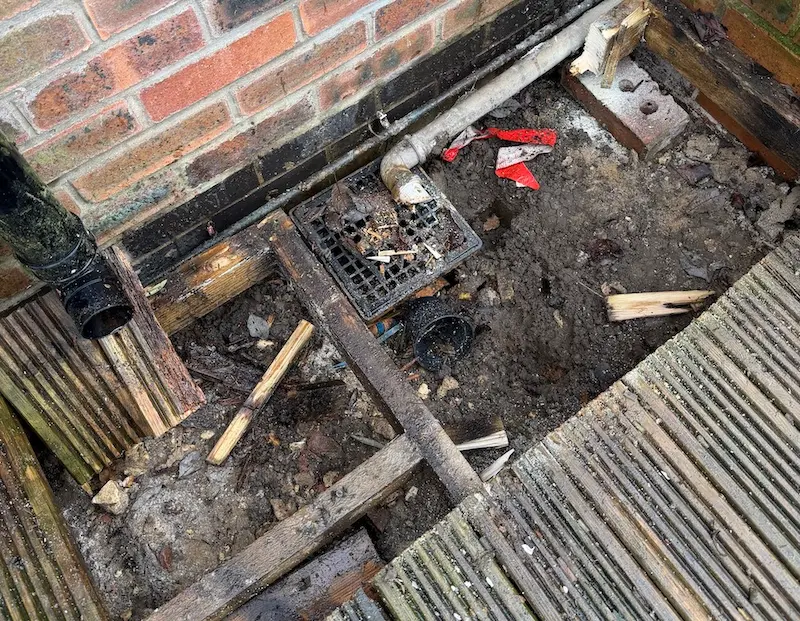
The Decking: Timber decking ran along the full width of the back of the house, approximately 3 meters deep. The decking was well-constructed above ground, but underneath told a different story. Using a torch and inspection mirror, we could see:
- Open access beneath the entire decking structure
- No mesh or barrier preventing wildlife access
- Rat droppings concentrated in one corner
- A clear “run” where rats had worn a path through the soil
- Evidence of nesting material (shredded paper, fabric fragments)
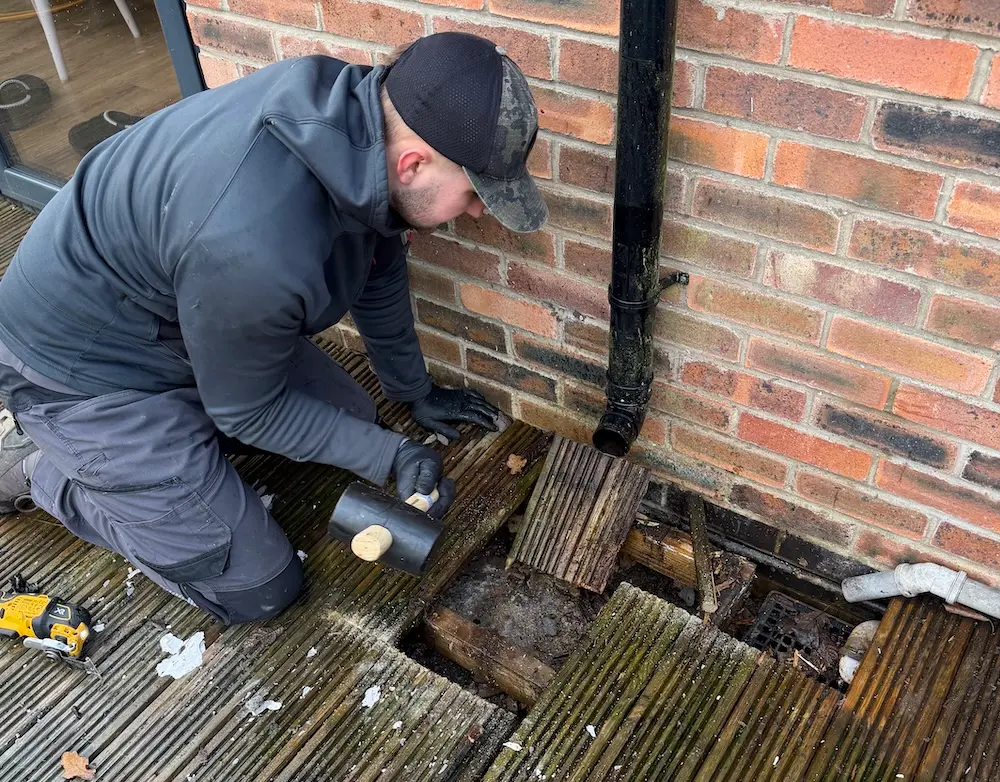
The Critical Entry Point: Following the rat run from under the decking, we traced it to the back wall of the property. Here we found the main issue: a gap under a concrete lintel directly above a drainage inspection point.
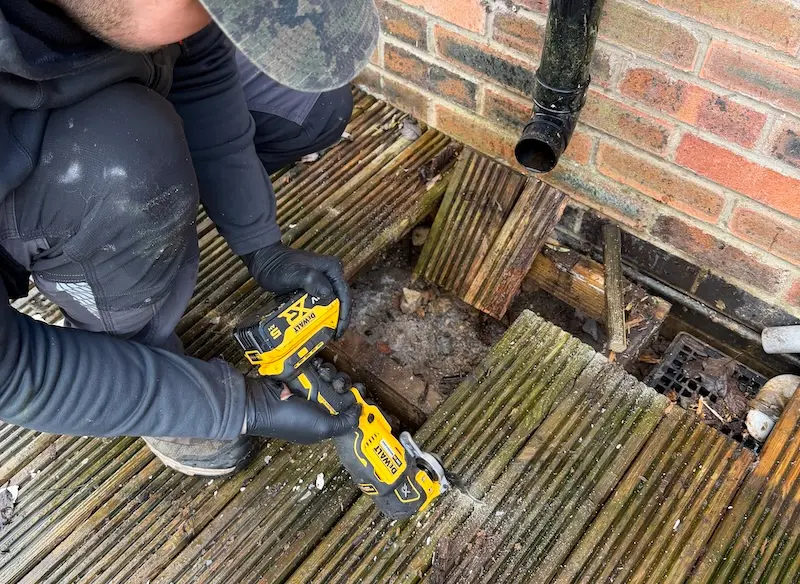
When builders had installed the decking, they’d worked around an existing drain access point. To maintain drainage flow, they’d used pea gravel around the drain—but they’d also left a 30-40mm gap under the lintel where it met the ground. Rats had exploited this gap to access the wall cavity.
Why This Entry Point Was So Problematic
This wasn’t just any gap—it was perfectly positioned for rats:
- Protected location: Under the decking, hidden from view, sheltered from weather
- Near drainage: Rats are attracted to areas near water sources and drainage systems
- Direct cavity access: The gap led straight into the wall cavity, giving rats a route throughout the property
- Poor materials: Pea gravel provides zero barrier to rats—they simply push it aside
- Continuous shelter: From under decking → gap under lintel → wall cavity = complete protected route
Internal Cavity Inspection
Using specialised inspection equipment (an endoscope camera), we checked the wall cavity accessible through an internal air-brick. This confirmed our suspicions:
- Active rat presence in the cavity (we could see droppings on cavity wall ties)
- Evidence of rats using the cavity as a highway between the external gap and other parts of the property
- Visible access to the interior of the house (bad news—they had breached the internal walls)
- The cavity was dry and sheltered—ideal rat habitat
The Bishopthorpe Context
This type of problem is increasingly common in Bishopthorpe and similar South York villages. Here’s why:
Property Improvements Without Pest Awareness: Bishopthorpe properties, many dating from the early-to-mid 20th century, are being improved with extensions, decking, patios, and garden rooms. When builders focus on the primary construction without considering pest proofing, they inadvertently create perfect conditions for rodents.
Proximity to Green Spaces: Bishopthorpe backs onto fields, the River Ouse corridor, and has generous gardens. This means higher baseline rat populations compared to dense urban areas. Rats don’t have far to travel to find properties like this one.
Older Building Stock: Many Bishopthorpe homes have cavity walls, airbricks, and older drainage systems—all potential entry points if not maintained properly.
Our Treatment Plan: A Three-Stage Approach
Based on our inspection findings, we recommended a comprehensive approach rather than just poisoning. Here’s why:
Poison alone wouldn’t solve this:
- Rats would keep entering through the open gap
- Dead rats in the cavity would create odor issues
- The underlying structural problem would remain
- Homeowner would face recurring infestations
Our approach targeted three goals:
- Immediately reduce the rat population (trapping)
- Permanently eliminate access points (proofing)
- Monitor success (follow-up visit)
Stage 1: Strategic Trapping
We positioned professional-grade snap traps in key locations:
Under the Decking:
- 4 traps placed along the rat run we’d identified
- Positioned near but not blocking the entry point (we wanted rats to continue using this route)
- Baited with peanut butter (more effective than cheese for York rats)
- Secured to prevent non-target animals disturbing them
Garden Perimeter:
- 2 traps along the fence line where rats were using as a highway
- Positioned in discreet locations to avoid startling the homeowner’s pets (a cat that had outdoor access)
Why Trapping Instead of Poison Here:
For this property, trapping was the better primary method:
- Location control: We knew exactly where rats were active
- No secondary poisoning risk: The homeowner’s cat couldn’t be harmed by eating a poisoned rat
- Cavity safety: No risk of rats dying inside the wall cavity and creating odor
- Immediate feedback: Traps show us success rate instantly
- Target specific: Only affects rats using the identified routes
Stage 2: Professional Proofing
This is where professional expertise separates effective pest control from temporary fixes. The gap under the lintel needed permanent sealing—but not in a way that blocked drainage.
The Challenge:
- Must seal against rats (anything smaller than 15mm gap)
- Must not impede drainage flow from the inspection point
- Must be durable (resist weather, ground movement, rat gnawing)
- Must look presentable (visible from the garden when under decking)
Our Solution:
We used a combination of materials specifically chosen for this application:
Galvanised Wire Mesh:
- Heavy-duty 6mm galvanised steel mesh
- Cut to size and shaped to follow the lintel profile
- Positioned to cover the entire gap while allowing water flow beneath
Specialist Cement Mix:
- Rapid-setting cement combined with the wire mesh
- Applied to create a solid barrier from ground level to the underside of the lintel
- Sloped to direct water away from the property
- Textured to blend with existing masonry
Why This Works Better Than Pea Gravel:
The original builder had used pea gravel around the drain—a common but ineffective approach:
- ❌ Pea gravel: Loose material that rats push aside or burrow through
- ✅ Wire mesh + cement: Solid barrier rats cannot penetrate or move
- ❌ Pea gravel: Needs constant topping up as it disperses
- ✅ Wire mesh + cement: Permanent solution requiring no maintenance
- ❌ Pea gravel: Gives false sense of security
- ✅ Wire mesh + cement: Verified barrier we can guarantee
Additional Proofing:
While we were on site, we also identified and addressed two other potential entry points:
- Airbrick Check: We verified all airbricks had appropriate mesh and were intact
- Utility Entry Points: We checked where gas and water pipes entered the property and sealed minor gaps with expanding foam rated for pest control
Stage 3: Follow-Up Visit (72 Hours Later)
We scheduled a return visit within three days to:
Check Trap Success: We’d caught 3 adult rats in the traps under the decking and 1 along the fence line. This confirmed:
- The population wasn’t huge (4 rats over 3 days suggests a small colony)
- Our trap positioning was accurate (high success rate)
- The entry route we’d identified was the main access point
Verify Proofing Integrity: We inspected the cement/mesh proofing work to ensure:
- Cement had cured properly (it had)
- No signs of rats attempting to breach or dig around it (none)
- Drainage still functioning correctly (it was)
- No gaps or weaknesses in the seal (all solid)
Monitor for Activity: We looked for new signs of rat activity:
- No fresh droppings under decking or in the garden
- No new damage to traps or bait
- No evidence of rats attempting to find alternative entry points
Customer Feedback: The homeowner reported:
- No scratching sounds in the walls since our first visit
- No rat sightings in the garden
- Peace of mind knowing the entry point was permanently sealed
The Result: Problem Solved in 3 Days
From initial call to confirmed resolution: 72 hours.
What we achieved: ✓ Identified the root cause (builder error during decking installation)
✓ Eliminated the existing rat population (4 rats trapped)
✓ Permanently sealed the entry point (galvanised wire + cement)
✓ Prevented future infestations (professional proofing)
✓ Provided peace of mind (no more wall scratching)
Why it worked:
- Comprehensive inspection found the actual problem, not just symptoms
- Professional-grade materials (not DIY solutions like pea gravel)
- Combination of population control (traps) + prevention (proofing)
- Follow-up verification ensured success
Lessons from This Bishopthorpe Case
This job perfectly illustrates several important points about rat control in York properties:
1. Building Work Can Create Pest Issues
The decking was professionally installed and looks great—but the builder wasn’t thinking about pest proofing. This is incredibly common across York, Bishopthorpe, and surrounding areas. We regularly see:
- Decking installed without barriers underneath
- Extensions built without sealing the join between old and new
- Garden rooms added without checking for gaps
- Driveways laid that create gaps along foundations
Always ask builders: “Have you considered pest proofing?” If they look confused, insist they do it or hire a pest control professional to proof after they finish.
2. Pea Gravel Is Not Rat Proofing
This deserves emphasis because it’s such a common mistake. Pea gravel:
- Looks tidy
- Allows drainage
- Is easy to work with
But it provides zero protection against rats. Proper proofing near drains requires materials rats cannot move or breach: wire mesh, cement, expanding foam designed for pest control, or purpose-made drain guards.
3. Location Matters: Why Bishopthorpe Properties Are Vulnerable
Bishopthorpe sits at the edge of York, bordered by:
- Agricultural land to the west and south
- The River Ouse corridor to the east
- Generous gardens providing cover and food
This creates higher rat pressure than you’d find in central York. Properties on the outskirts (Bishopthorpe, Copmanthorpe, Upper Poppleton, Haxby) face this same increased risk.
If you live in these areas:
- Be extra vigilant about garden maintenance
- Don’t leave bird seed or pet food outside
- Check your property perimeter annually for gaps
- Consider professional pest-proofing if you have decking, sheds, or outbuildings
4. Professional Inspection Finds Root Causes
The homeowner could have:
- Put poison down themselves (rats keep entering)
- Called a budget pest control company (might have just baited, not proofed)
- Ignored it (problem gets much worse)
Our inspection-first approach meant we:
- Found the exact entry point
- Understood why rats chose this property
- Addressed the root cause, not just symptoms
- Provided a permanent solution
This is why professional pest control costs more than DIY—but saves money long-term by actually solving the problem.
5. Trapping Works When Applied Strategically
Trapping isn’t appropriate for all rat infestations, but when you know exactly where rats are active (as we did here), it’s highly effective:
- 4 rats caught in 3 days = 100% success rate for the identified colony
- No risk of secondary poisoning
- No dead rats in inaccessible locations
- Immediate feedback on population size
- Cleaner, more humane when done professionally
Common Questions About Rats Under Decking in York
Why do rats live under decking?
Decking creates ideal conditions for rats:
- Dark and sheltered: Protected from weather and predators
- Undisturbed: People rarely check under decking
- Close to food: Gardens often have compost, bird seed, fallen fruit
- Nesting material: Leaves and debris accumulate underneath
- Access to properties: Often positioned against the house wall
In York, where many properties have generous gardens and decking is popular, we see this pattern repeatedly across Bishopthorpe, Fulford, Acomb, and Haxby.
How do I know if I have rats under my decking?
Look for these signs:
Visual evidence:
- Rat droppings (dark, pellet-shaped, about 12mm long)
- Runs or tracks through soil/grass leading to decking
- Gnaw marks on wood or nearby items
- Nesting material visible at decking edges
Sounds:
- Scratching or scurrying under decking
- Noise particularly at dusk/dawn (rats are crepuscular)
- Squeaking if there’s a large colony
Smells:
- Musky, ammonia-like odor from urine
- Particularly noticeable on warm days
If you notice any of these in Bishopthorpe, York, or surrounding areas, contact us for a professional inspection.
Can I remove rats from under decking myself?
You can try, but success is unlikely without addressing entry points. DIY approaches typically fail because:
Poison problems:
- Rats may die under decking (odor issues)
- Doesn’t stop more rats entering
- Risk to pets and wildlife
- Requires ongoing baiting
Trap limitations:
- Hard to position effectively under low decking
- Rats avoid poorly-placed traps
- You need multiple traps for success
- Must be checked daily
The real issue—entry points:
- Most people don’t find or seal all access points
- Rats return even after initial elimination
- Professional proofing requires specialist materials
For Bishopthorpe and York properties, professional pest control typically costs £150-300 for complete treatment including proofing—far less than months of failed DIY attempts.
How do you proof under decking against rats?
Proper decking rat-proofing involves:
Perimeter barriers:
- Wire mesh buried 150mm deep around decking perimeter
- Mesh extended upward to meet the deck boards
- Heavy-duty galvanised steel (rats cannot gnaw through)
Gap sealing:
- All gaps where decking meets the house sealed with cement/wire mesh
- Particular attention to areas near drains, utilities, airbricks
- Never use loose materials like pea gravel
Maintenance access:
- Proofing designed to allow annual inspection
- Removable sections if needed for utilities
- Clear documentation of what’s been sealed and where
We provide this service across York, including Bishopthorpe, and can proof decking on new installations or retrofit existing decking.
How quickly can you respond to rat problems in Bishopthorpe?
We typically attend rat control calls in Bishopthorpe and surrounding York areas (YO23, YO19, YO24) within 24 hours. For urgent cases—like rats inside the property—we can often provide same-day service.
Our South York coverage is excellent, serving:
- Bishopthorpe village
- Dringhouses
- Copmanthorpe
- Acaster Malbis
- Appleton Roebuck
- All YO23 and YO24 postcodes
Call 07951 392 424 for rapid response.
Professional Rat Control Across York and Bishopthorpe
This Bishopthorpe case demonstrates what professional rat control should involve: thorough inspection, root cause identification, population elimination, and permanent proofing. It’s not just about killing rats—it’s about solving the underlying problem so they don’t come back.
If you’re experiencing rat issues in Bishopthorpe, York, or surrounding villages, don’t wait for the problem to escalate. The homeowner in this case study acted quickly when they saw warning signs, which meant:
- Faster resolution (3 days vs weeks or months)
- Lower cost (small infestation vs established colony)
- No interior damage (caught before rats entered living spaces)
- Peace of mind restored
Don’t Let Builder Errors Become Pest Problems
If you’ve recently had building work done—decking, extensions, garden rooms, or any ground-level construction—it’s worth having a professional pest inspection. We can identify potential entry points before rats find them, saving you the stress and expense of dealing with an established infestation.
Contact Yor-Pest Control for Rat Problems in York
Experiencing rat issues in Bishopthorpe, York, or surrounding areas? We provide:
- Rapid response: Typically 24 hours, often same-day for YO23/YO24 postcodes
- Comprehensive inspection: We find the root cause, not just symptoms
- Permanent solutions: Professional proofing using galvanised wire and cement
- Follow-up verification: We confirm the problem is solved
- Honest advice: If builders created the problem, we’ll explain what went wrong
Call us now on 07951 392 424 for professional rat control in Bishopthorpe and across York.
We serve all York postcodes including YO1, YO10, YO19, YO23, YO24, YO30, YO31, YO32, and surrounding villages.
Visit our main York pest control page to learn about our full range of services, or learn more about our rat control service covering prevention, treatment, and proofing.
Get in touch today and protect your York property from rat damage.