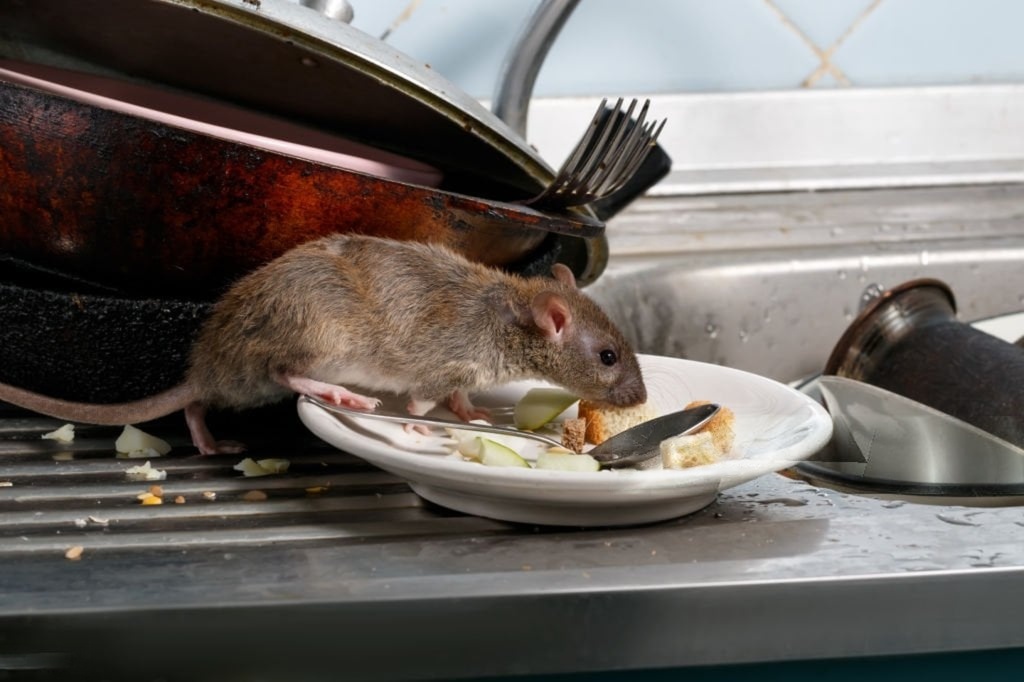
“We’ve got noises in the walls.” That’s how the call started when the owners of a Tang Hall property contacted Yor-Pest Control on a Thursday afternoon in late January. They thought maybe a mouse, possibly two. We’d dealt with several other large properties to know it was likely more serious.
This case perfectly illustrates why professional finishing in construction work matters and why ignoring “small” pest problems quickly becomes catastrophically expensive. What seemed like minor scratching sounds turned into one of the most extensive rat remediation projects we’ve completed in York this year.
If you’ve recently had building work done on your York property and you’re hearing noises, read this carefully. You might save yourself thousands of pounds.
Contents
- 1 The Call: “Just Scratching Noises”
- 2 Our Initial Assessment: Worse Than Expected
- 3 The Extent of Damage: Beyond Simple Pest Control
- 4 Our Multi-Stage Emergency Response
- 5 The Timeline and True Cost
- 6 Critical Lessons for York Homeowners
- 7 Why Professional Pest Control Matters for Serious Infestations
- 8 Signs of Builder-Related Pest Problems in York
- 9 Tang Hall and Surrounding York Areas
- 10 Frequently Asked Questions
- 11 Protecting Your York Property After Building Work
- 12 Professional Emergency Pest Control Across York
The Call: “Just Scratching Noises”
They had heard scratching sounds for approximately two months before calling us. Initially, the noises occurred only occasionally during early mornings. Over time, they became more frequent and louder, eventually happening throughout the day and night.
They’d recently completed a rear extension on their property, adding a kitchen and bathroom. The building work had finished three months earlier. They assumed any construction-related issues had settled. The scratching started about a month after the builders left.
Like many York homeowners, they initially tried to ignore the problem, hoping whatever was making noise would leave on its own. When sounds intensified and they began hearing movement in multiple rooms, they finally decided to investigate professionally.
Our Initial Assessment: Worse Than Expected
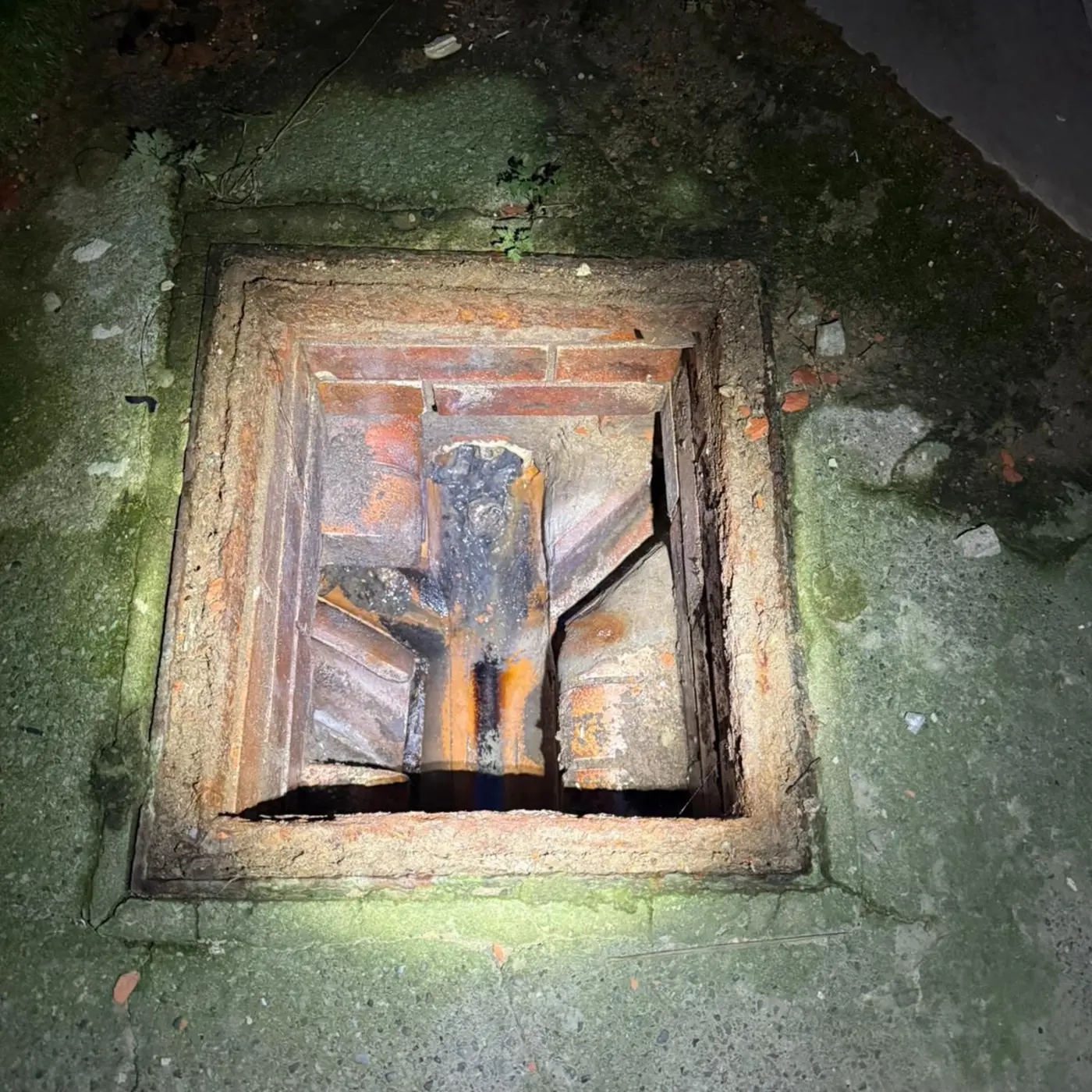
When we arrived at the Tang Hall property, external inspection immediately revealed concerns. The rear extension work had created numerous potential entry points that hadn’t been properly sealed. More worryingly, we spotted what appeared to be rat droppings near the external waste pipes.
The homeowner showed us where they heard the loudest noises—a utility room wall adjoining the new extension. We could hear scratching immediately, suggesting active rat movement. This wasn’t one or two rats passing through. This was established occupation.
The Discovery: Open Highway to the Sewers
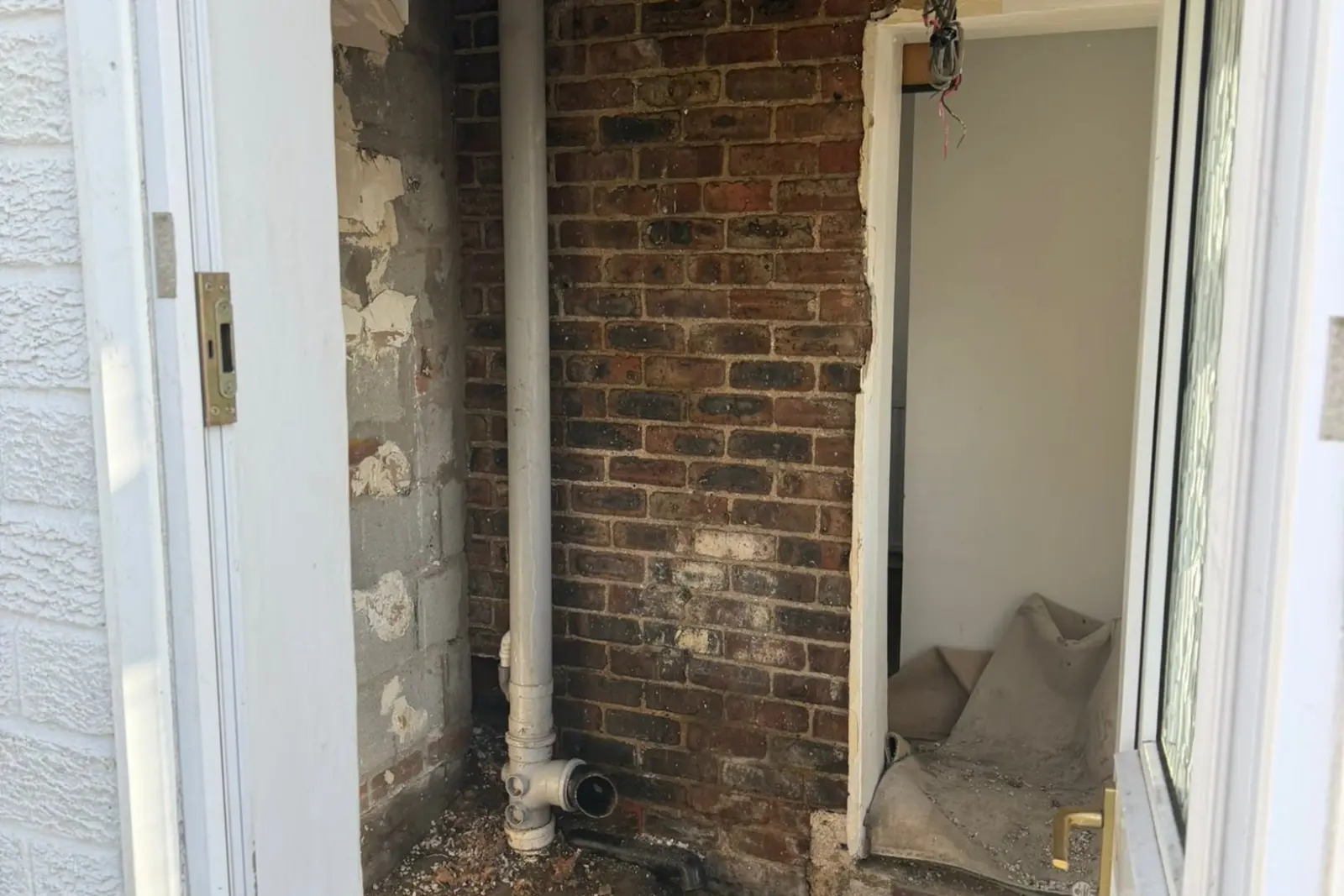
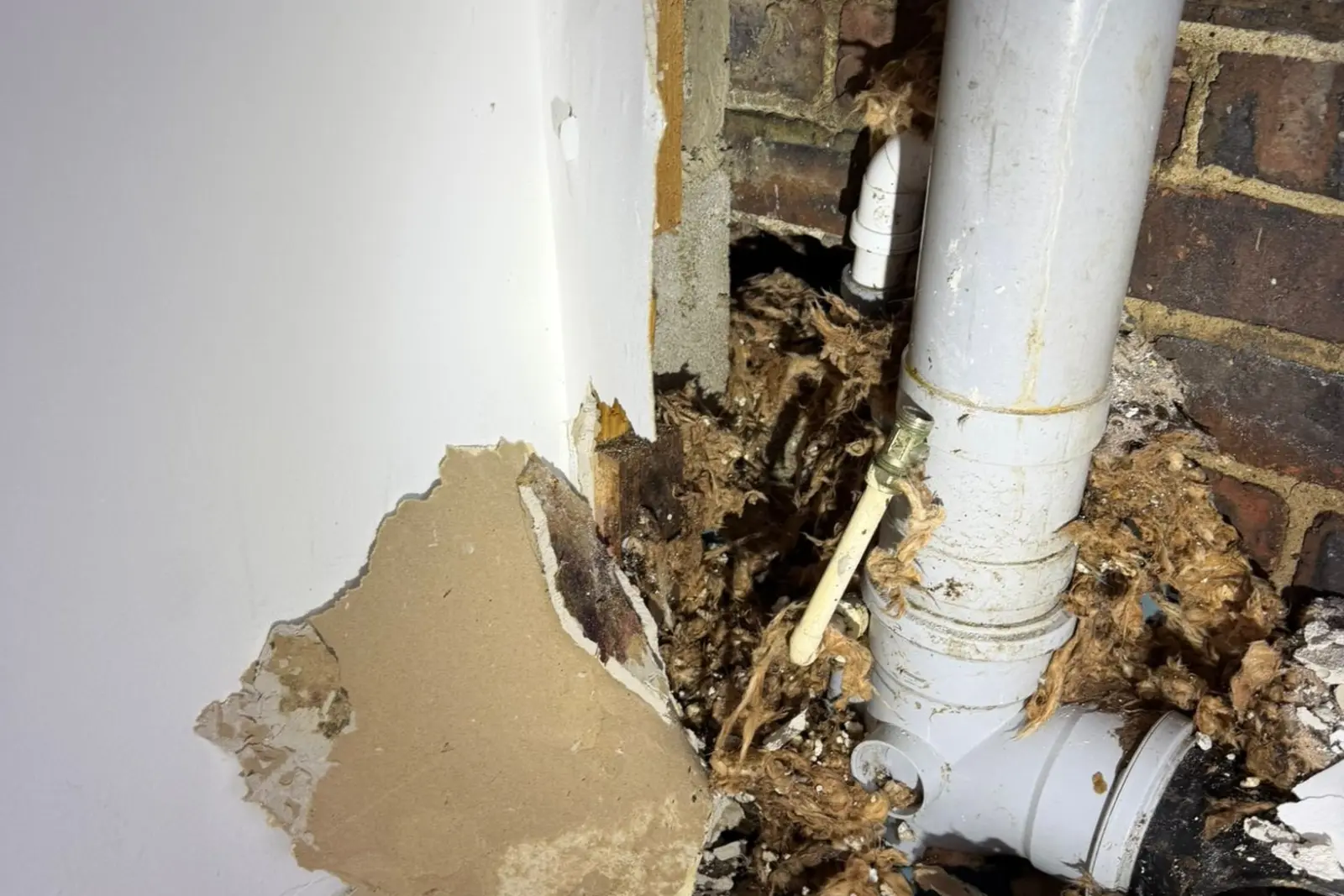
What we found once we began investigating shocked even us. The builders who’d completed the extension had left the soil stack—the large pipe carrying waste from toilets to the sewer—completely open and unsealed at the connection point inside the wall cavity.
This isn’t a small oversight. It’s a fundamental building failure. Soil stacks must be properly sealed and capped to prevent sewer gas escape and pest access. Leaving one open creates a direct vertical highway for rats traveling through York’s drainage system to access your property’s internal structure.
Additionally, the external brickwork had a large unsealed hole where utility pipes entered the building. Rather than properly sealing around pipes with appropriate materials, the builders had left a gap approximately 100mm across—easily large enough for multiple rats to access simultaneously.
The Extent of Damage: Beyond Simple Pest Control
Once we understood the access points, we needed to determine how far rats had spread through the property. The answer was devastating. The rats hadn’t just used the soil stack as entry—they’d established it as their primary nest site, with satellite nesting areas throughout the wall cavities and under floors.
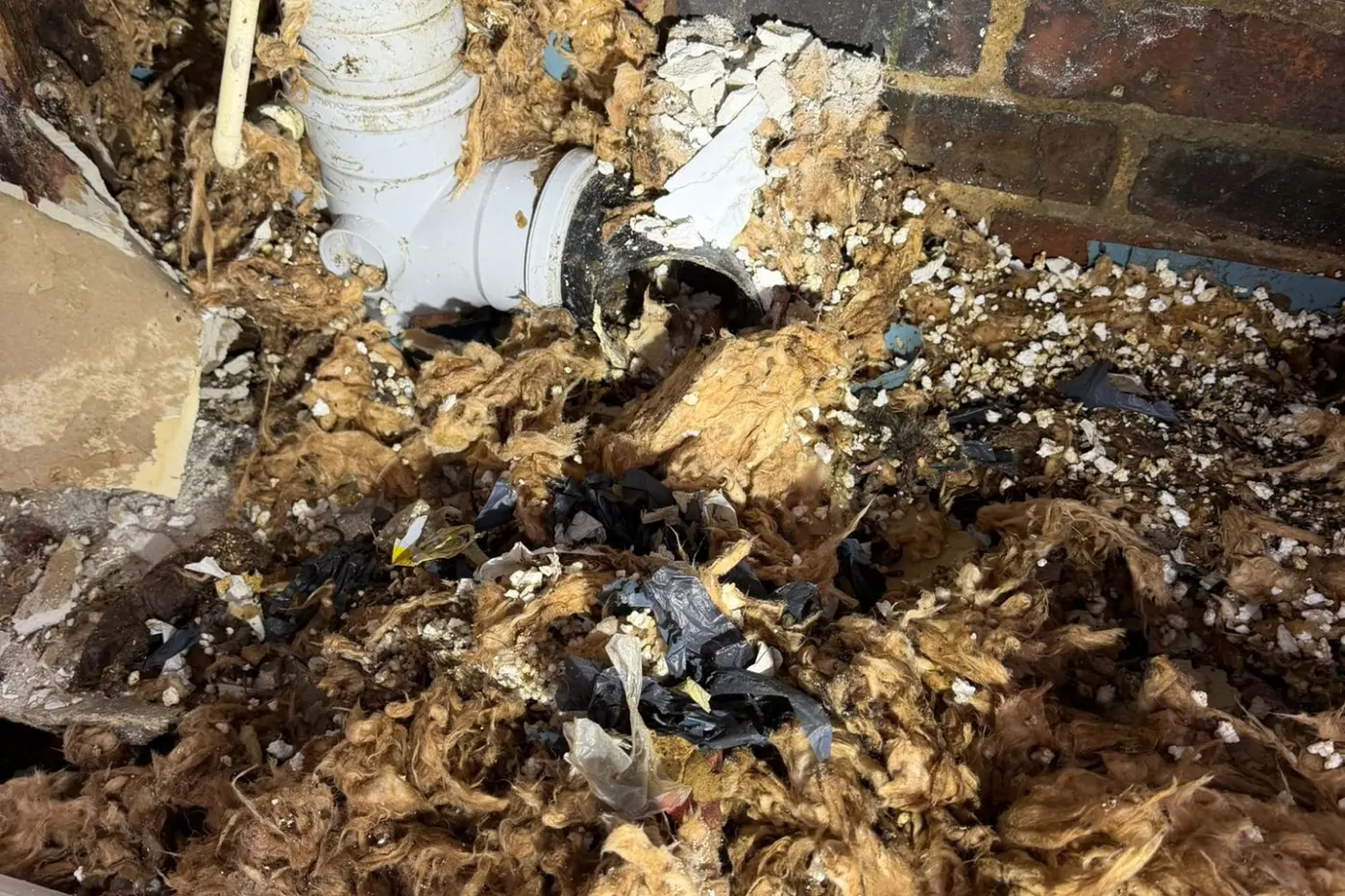
The contamination was extensive. Rat urine had soaked through insulation in multiple areas under floors. Droppings covered surfaces throughout wall cavities. Nesting material made from shredded insulation, brought-in debris, and organic matter filled spaces behind walls. The distinctive ammonia smell of rat urine permeated several rooms.
Why Complete Structural Access Was Necessary
In standard rat infestations, we can usually treat effectively through strategic bait placement and trapping without major structural disturbance. This case required a completely different approach because of the contamination levels and health risks involved.
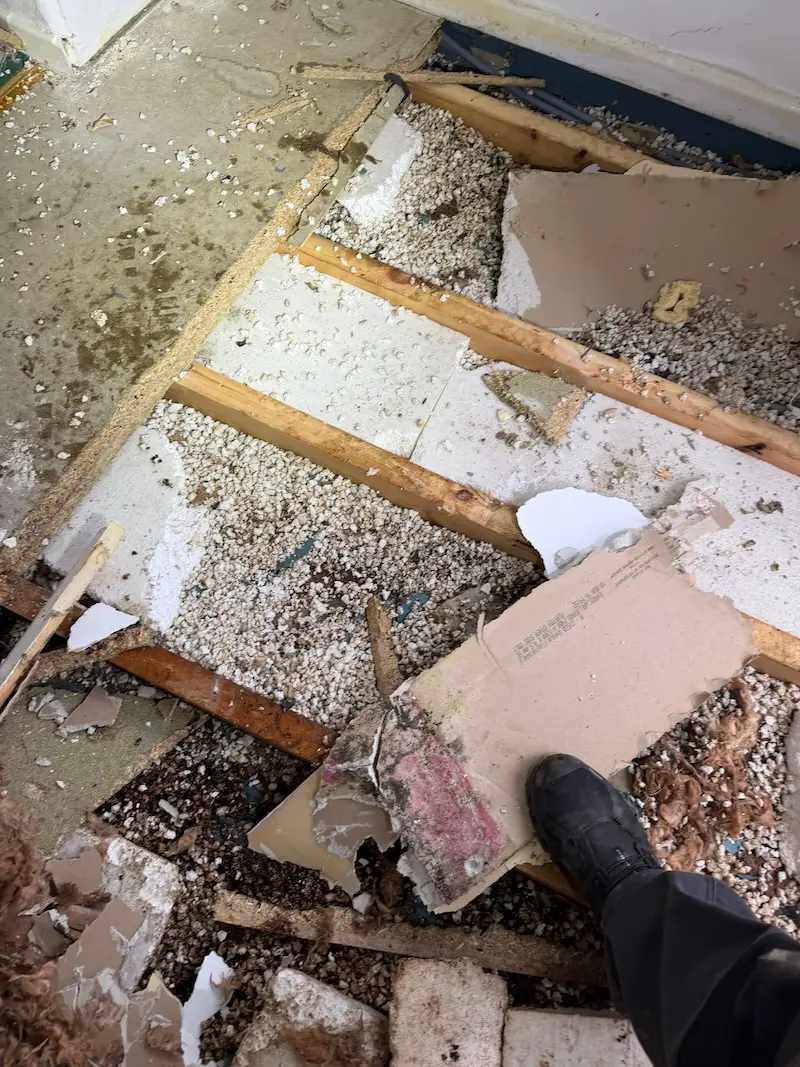
To properly remediate this Tang Hall property, we needed to strip wall boards to access nesting sites hidden behind plaster, remove ceiling sections to reach contaminated loft insulation and ceiling voids, pull up flooring to eliminate urine-soaked insulation and treat floor voids, and most importantly, coordinate with drainage specialists to properly seal the breached soil stack.
The health risks of leaving contaminated material in place were simply too significant to address with surface treatments alone.
The Biohazard Reality
Rats carry serious diseases that pose genuine health risks to York residents. In this Tang Hall property, the contamination levels created substantial exposure risks including Weil’s disease from leptospirosis bacteria in rat urine, salmonella from rat droppings, hantavirus from dried rat excretions becoming airborne, and various parasites including fleas, mites, and ticks that rats carry.
The concentration of rat urine in insulation created particularly serious risks. When dried, rat urine becomes dusty and easily airborne. Simply walking across contaminated floor spaces or disturbing walls could release harmful particles into the air homeowners breathe.
This is why our technicians worked in full respiratory protection including industrial-grade respirators, hazmat suits covering all skin, and sealed gloves and boots. This wasn’t theatrical precaution—this was necessary protection against documented health hazards.
Our Multi-Stage Emergency Response
Addressing this level of infestation required coordinated action across multiple trades and specialists. This wasn’t a job we could solve in a single visit.
Stage 1: Immediate Rat Population Control
Before any structural work could begin, we needed to eliminate the active rat population. We implemented strategic professional-grade trapping throughout accessible areas, professional rodenticide placement in locations inaccessible to children and pets, and monitoring to confirm population reduction before proceeding to structural work.
Over the first week, we removed fourteen rats from various locations throughout the property. This confirmed our assessment that the infestation was severe and long-established. Rats breed prolifically—a single breeding pair can produce 200 offspring in one year under ideal conditions. These weren’t the original two rats that found entry. This was multiple generations establishing a colony.
Stage 2: Drainage Specialist Coordination
We brought in a York drainage specialist to properly address the soil stack breach. This required accessing the connection point inside the wall, thoroughly cleaning and decontaminating the area, properly sealing the soil stack with professional drainage fittings, and pressure testing to confirm the seal integrity.
The drainage team also conducted a full CCTV survey of the property’s drainage system to confirm no damage existed in the underground pipes that might allow future rat access. Fortunately, the drains themselves were intact—the rats had simply exploited the open connection inside the building.
Stage 3: Structural Sealing
With the primary entry point secured, we addressed all secondary access routes. The large external hole where utilities entered received professional sealing using galvanized steel mesh backed with cement—materials rats cannot chew through. Smaller gaps around pipes throughout the property were sealed with appropriate materials. Damaged airbricks were replaced with properly meshed versions. External mortar damage was repaired to eliminate any remaining potential access points.
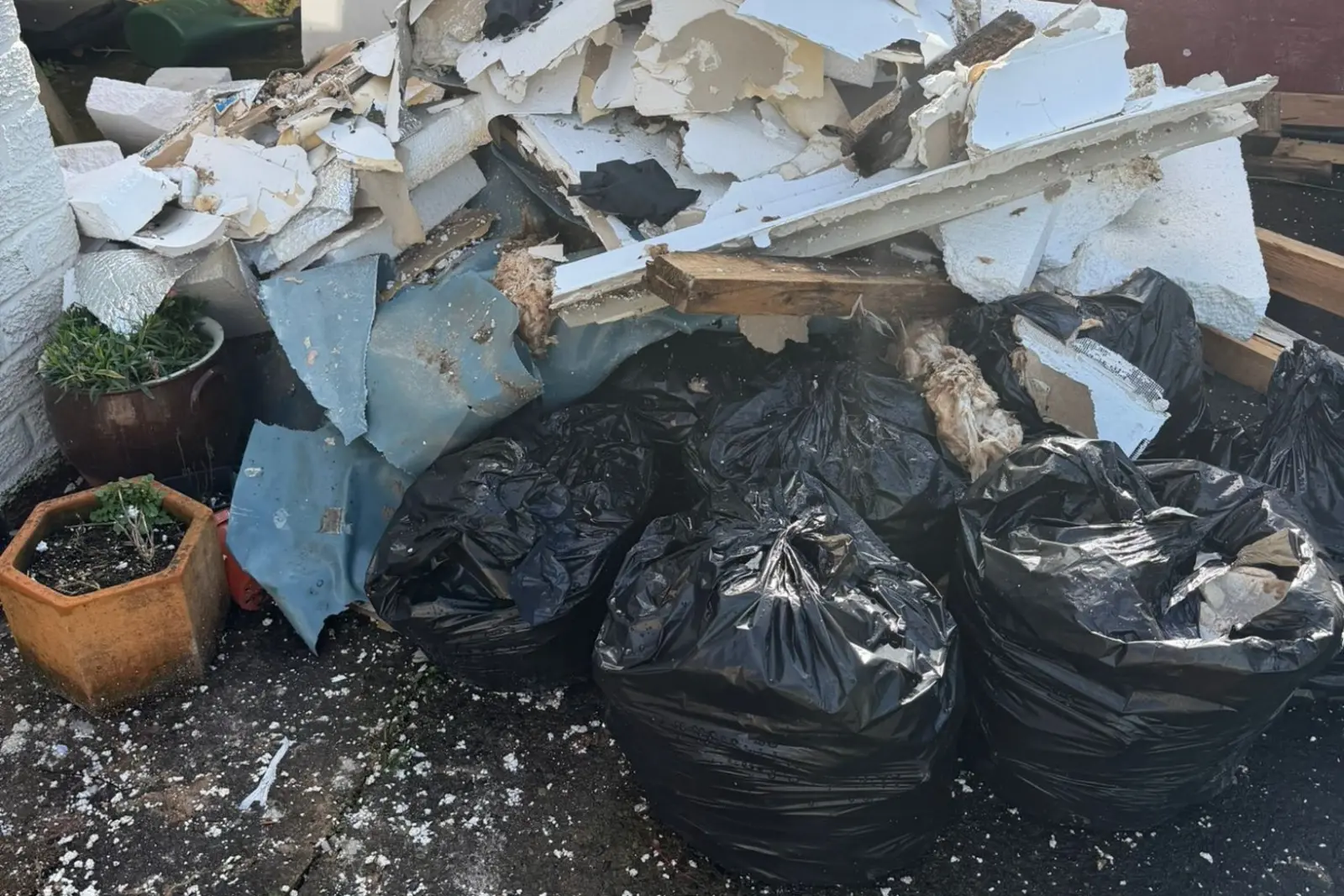
This sealing work is critical. Simply eliminating existing rats while leaving entry points open guarantees re-infestation. York’s rat population is substantial and persistent. Any property with accessible entry will eventually attract new occupants.
Stage 4: Biocide Decontamination
With rats eliminated and entry points sealed, we could finally address the contamination. This involved complete removal of all urine-soaked insulation from under floors and in walls, removal of nesting material and debris from all cavities, comprehensive biocide application to all affected surfaces killing bacteria, viruses, and parasites, professional-grade insect control treating for rat-borne fleas and mites, and final sanitization preparing areas for reconstruction.
The biocide treatment we use is hospital-grade and specifically formulated for eliminating pathogens associated with rodent infestations. This isn’t something available in retail stores. It requires professional application with proper safety equipment and training.
Stage 5: Reconstruction Coordination
The final stage involved working with the homeowner’s chosen contractors to rebuild affected areas. We provided comprehensive documentation of all work completed, certification that the property was now pest-free and decontaminated, recommendations for reconstruction materials to prevent future pest access, and follow-up inspections confirming no rat activity had resumed.
The Timeline and True Cost
From initial call to final clearance took several days of intensive work. The financial impact to the homeowner extended well beyond an initial cll out fee. Emergency pest control and remediation services totalled several hundred pounds. Drainage specialist call-out and repairs added additional costs. Structural reinstatement including new plasterboard, ceiling panels, flooring, and insulation required significant investment. Decoration throughout affected rooms was necessary.
Most painfully, the homeowner had already paid the builders who caused the problems. Recovering costs through legal action against contractors who’ve moved on and may lack proper insurance is difficult and uncertain.
The total cost significantly exceeded what proper building work would have cost initially. A few hours of professional sealing work by the original builders would have prevented this entire catastrophe.
Critical Lessons for York Homeowners
This Tang Hall case study offers important warnings for anyone having building work done in York, particularly extensions, renovations, or utility installations.
Inspect Builder Work Before Final Payment
Never pay builders in full before thoroughly inspecting for proper sealing. Specific areas requiring verification include all soil stack connections properly sealed and capped, external holes where utilities enter the building completely filled, gaps around windows and doors properly sealed, airbricks and vents fitted with appropriate mesh, and roof work leaving no gaps in soffits or fascia boards.
If you’re not confident assessing these yourself, hire a building surveyor for final inspection before releasing final payment. The few hundred pounds for professional inspection could save thousands in future remediation costs.
Respond Immediately to Post-Construction Noises
If you hear scratching, scampering, or unexplained sounds after building work, call professional pest control immediately. Don’t wait weeks hoping problems resolve. Every week’s delay allows rat populations to grow and spread throughout your property’s structure.
Early intervention when rats first enter costs £120-180 for professional treatment. Delayed intervention requiring extensive remediation costs thousands. The savings from acting fast are substantial.
Understand Your Legal Position
Building regulations require proper pest-proofing as part of construction work. Builders leaving open soil stacks and unsealed external holes violate these requirements. However, proving responsibility and recovering costs can be challenging, especially if builders have dissolved their business or lack adequate insurance.
Your best protection is preventing problems through proper inspection before final payment rather than attempting recovery afterward.
Why Professional Pest Control Matters for Serious Infestations
Some York homeowners might wonder if DIY approaches could have addressed this Tang Hall problem. The answer is definitively no. This case required professional expertise and coordination across multiple specialties.
DIY pest control works for minor problems—individual wasps, small outdoor ant colonies, or preventive measures. It completely fails for established rat infestations, particularly those involving structural contamination and health hazards.
Professional pest control provided proper diagnosis identifying the multiple entry points and full infestation extent, professional-grade treatments not available to homeowners, coordination with drainage specialists for proper soil stack repairs, biohazard handling with appropriate safety equipment and training, and documentation and certification required for insurance claims and property sales.
The homeowner’s insurance eventually covered significant portions of the remediation costs because we provided comprehensive professional documentation. DIY attempts provide no such documentation and often void insurance coverage.
Signs of Builder-Related Pest Problems in York
If you’ve recently had building work completed on your York property, watch for these warning signs that builders may have created pest vulnerabilities.
Scratching or scampering sounds in walls, particularly near new construction or plumbing work, suggest rodent access through unsealed areas. Droppings appearing near new extensions or where utilities enter the building indicate rats exploiting builder-created entry points. Unusual smells including ammonia-like odors near walls or floors often indicate hidden rat urine contamination. Visual gaps around new pipes, windows, or where extensions meet existing structures show incomplete sealing work. Displaced insulation or debris visible in loft spaces or accessible voids suggests rodent activity in these areas.
Any of these signs warrant immediate professional inspection. The cost of an inspection is negligible compared to the cost of ignored problems developing into major infestations.
Tang Hall and Surrounding York Areas
This particular case occurred in Tang Hall, but similar building-related pest problems occur throughout York. We’ve addressed builder-caused rat infestations across Heworth, Huntington, Clifton, Acomb, and numerous other York neighborhoods where extension work or renovations created pest access.
Tang Hall properties often feature older housing stock with subsequent extensions and modifications. This creates particular vulnerability when modern additions aren’t properly integrated with existing structures. The junction between old and new construction frequently creates pest access if not professionally sealed.
If you live in Tang Hall, Heworth, or surrounding YO10 and YO31 postcode areas and you’ve had recent building work, inspect carefully for proper sealing. The area’s housing characteristics make builder-related pest problems unfortunately common.
Frequently Asked Questions
Can rats really enter through soil stack pipes?
Yes, absolutely. Rats are excellent swimmers and climbers who regularly travel through sewer systems. An open or unsealed soil stack provides a vertical highway from the sewer directly into your property’s plumbing system and wall voids. This is why professional builders must always cap and seal soil stacks properly according to building regulations. Failure to do so creates guaranteed pest access.
Why did this rat infestation require such extensive work?
The rats had established nests in wall cavities and under floors for months before discovery. Their urine-soaked insulation, extensive droppings, and accumulated nesting material created serious biohazard conditions requiring complete removal. Walls, ceilings, and flooring had to be removed to access all contaminated areas, eliminate health risks, and ensure complete decontamination. Surface treatments would have left dangerous contamination in place.
What should I do if I hear noises in my walls after building work?
Contact professional pest control immediately. Don’t wait weeks hoping problems resolve on their own. Rats breed rapidly—what starts as two rats becomes twenty within months as they reproduce. Early professional intervention when populations are small costs far less than extensive remediation work required after months of undetected breeding and contamination.
Are builders responsible for pest problems they cause?
Legally, this depends on contracts, building regulations compliance, and the builder’s insurance coverage. Leaving soil stacks open and unsealed external holes in walls violates building regulations and standard construction practices. However, proving responsibility and recovering costs can be difficult if builders lack proper insurance or have dissolved their business. Homeowners should thoroughly inspect all builder work for proper sealing of utilities, pipes, and external penetrations before making final payment to contractors.
How much does emergency rat remediation cost in York?
Standard rat control for simple infestations typically costs £120-180 for initial treatment with follow-up. However, extensive infestations requiring structural access, wall and floor removal, biohazard cleaning, and coordination with specialist drainage contractors cost significantly more depending on infestation extent, contamination levels, and structural damage. Prevention through proper building work costs far less than remediation after serious infestations establish.
Protecting Your York Property After Building Work
If you’re planning or have recently completed building work on your York property, take these protective steps.
Before builders leave, personally inspect or hire a surveyor to verify all soil stacks are properly sealed and capped, all holes where utilities enter the building are completely filled with appropriate materials, all gaps around new windows, doors, and extensions are properly sealed, all airbricks and vents are fitted with appropriate mesh preventing pest access, and all junction points between old and new construction are professionally finished.
If you discover problems, insist on proper correction before making final payment. Once you’ve paid in full, your leverage to ensure proper work completion effectively disappears.
After completion, monitor carefully for any signs of pest activity including unusual sounds, droppings, or odors. If anything seems wrong, get professional inspection immediately rather than waiting for problems to worsen.
Professional Emergency Pest Control Across York
Yor-Pest Control serves all York areas including Tang Hall, Heworth, Huntington, Clifton, Acomb, and all YO postcode areas. We provide emergency response for serious pest situations including rapid assessment when you discover pest problems, coordination with drainage and building specialists when structural work is required, comprehensive biohazard cleaning and decontamination, full documentation for insurance claims, and guaranteed resolution of pest problems.
If you’ve had recent building work and you’re concerned about potential pest access, we offer professional inspection services identifying vulnerabilities before they become infestations. Prevention costs far less than remediation.
Call us now on 07951 392 424 for emergency pest control in York, or contact us to discuss builder-related pest concerns.
This Tang Hall case demonstrates that “noises in the walls” can indicate serious problems requiring immediate professional intervention. Don’t make the expensive mistake of waiting until small problems become major catastrophes.